Tea isn’t just a drink in China — it’s a 4,000-year-old ritual woven through daily life. Slowing down for a pot of tea is one of the most rewarding cultural experiences you can have here.
The main types
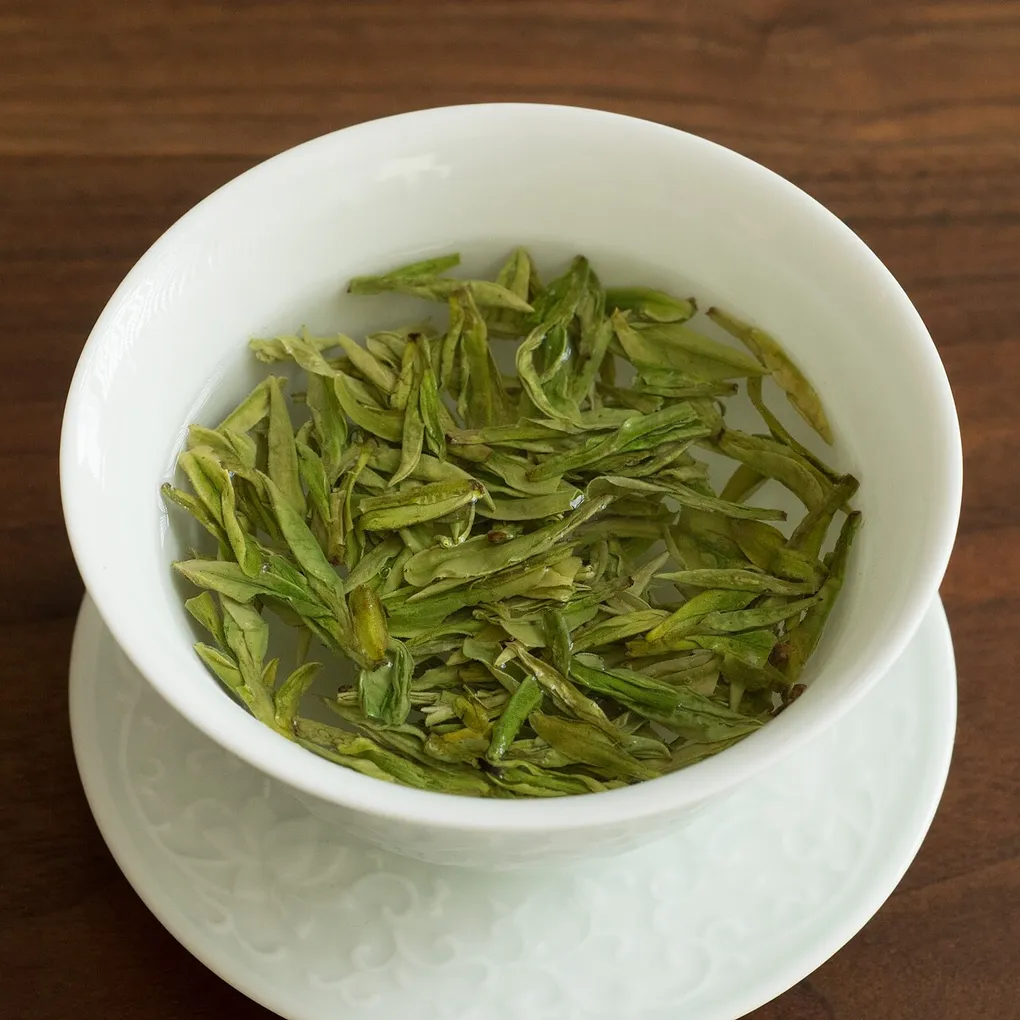
- Green — fresh and grassy; Longjing from Hangzhou is the most famous.
- Oolong — partly oxidised; Tieguanyin from Fujian is a classic.
- Black (red) tea — fuller and warming.
- Pu’er — fermented and earthy, from Yunnan, often aged like wine.
The gongfu ceremony
In a gongfu tea service, leaves are brewed many short times in tiny pots and cups, drawing out changing flavours. Watching (and joining) one is meditative and welcoming.
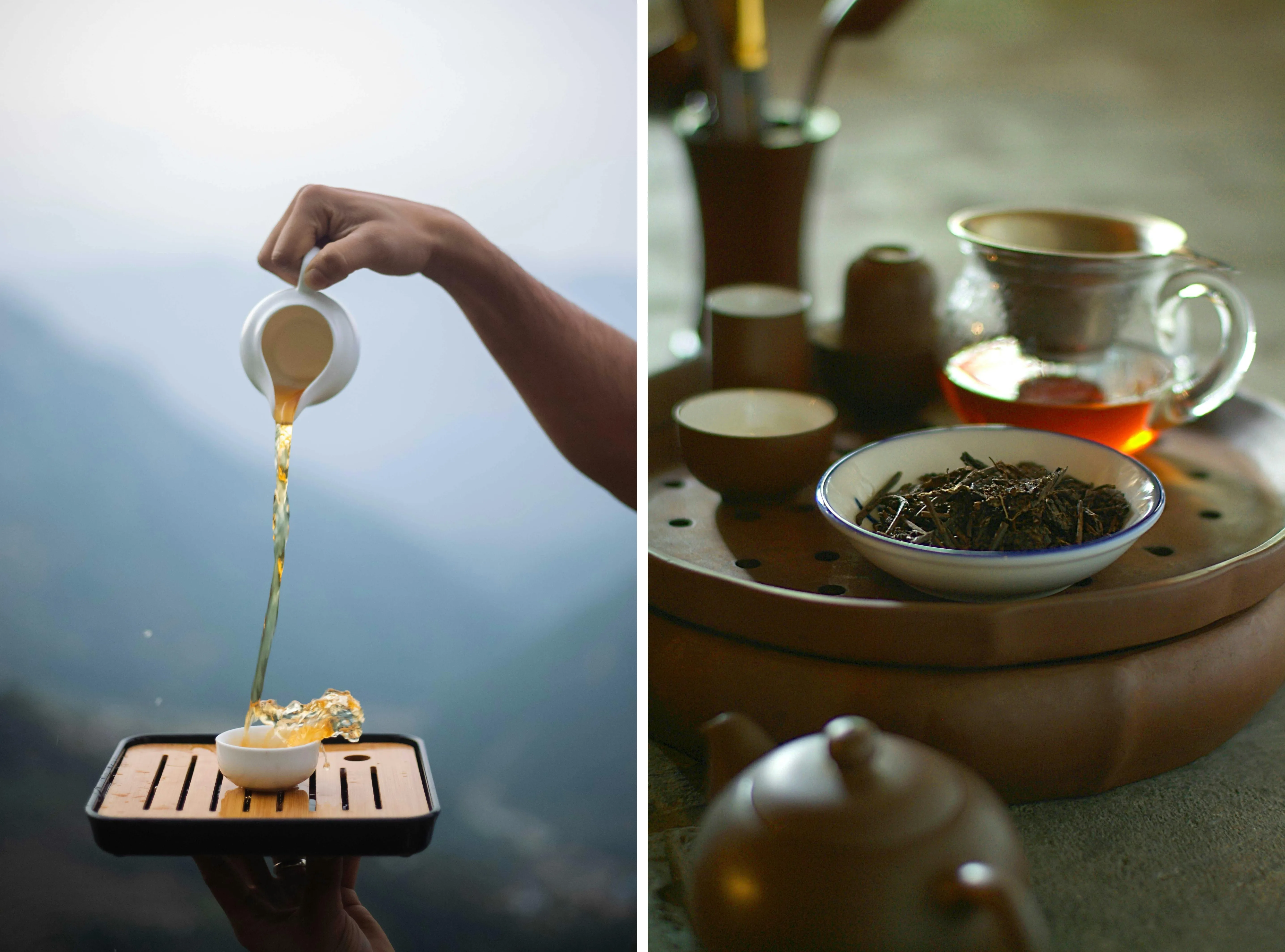 A gongfu tea service — loose-leaf tea and the tiny pots and cups used to brew it.
Where to experience it
- Tea houses in Chengdu’s People’s Park, old Beijing and Hangzhou.
- Tea plantations around Hangzhou (Longjing) and Fujian, where you can tour and taste at the source.
Book a tea tasting or plantation tour on Klook or Viator.
The new tea culture:
China’s drink-store boom
Tea in China isn’t only ancient ritual — it’s also one of the world’s hottest drinks trends. A wave of “new-style tea” (新茶饮) chains has swept the country, turning fresh-brewed tea, real fruit and milk/cheese foam into a daily habit for young people. Spotting these neon storefronts on every block is a genuine part of modern Chinese culture, and trying one is half the fun:
- CHAGEE (霸王茶姬) — fresh-milk tea with a refined, “guofeng” (Chinese-heritage) brand image; the breakout star, now expanding worldwide.
- HEYTEA (喜茶) — the pioneer of premium cheese-foam and fresh-fruit teas; trend-setting seasonal flavours.
- Auntea Jenny (沪上阿姨) — known for grain- and fruit-based teas, hugely popular and good value.
- Nayuki (奈雪的茶) — café-style tea shops pairing fruit teas with soft European-style bread.
- Mixue (蜜雪冰城) — the budget giant with its catchy jingle; ice cream and tea for just a few yuan.
How to order: most have picture menus on the Meituan / Dianping apps, or just point. You’ll be asked your sugar level (无糖 none → 全糖 full) and ice (去冰 none → 正常冰 normal). “三分糖” (30% sugar) and “少冰” (less ice) is a safe, local default.
Tips
- Accept the invitation to share tea — hospitality is the whole point.
- Loose-leaf tea is a perfect, packable souvenir.
- Be wary of the “tea ceremony” scam near tourist sites (see our safety guide).