Ask most people to picture Sichuan food and they’ll think of one thing: heat. A bubbling red hotpot, a tongue-numbing pile of chillies, sweat on the brow. That’s real — but it’s a fraction of the story. The most exciting movement in Sichuan cooking right now isn’t a new fusion trend; it’s a revival of the cuisine’s refined, classical banquet tradition — the elegant, often barely-spicy haute cuisine that Sichuan was famous for a century ago. And no one embodies that revival more than chef Zhang Yuanfu (张元富) and his quietly legendary Chengdu restaurant, Songyunze (松云泽).
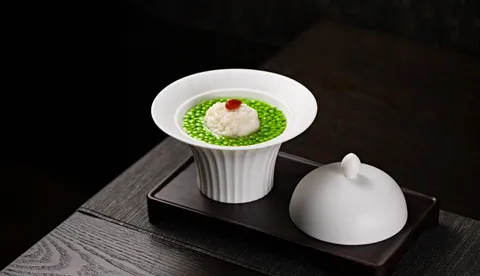
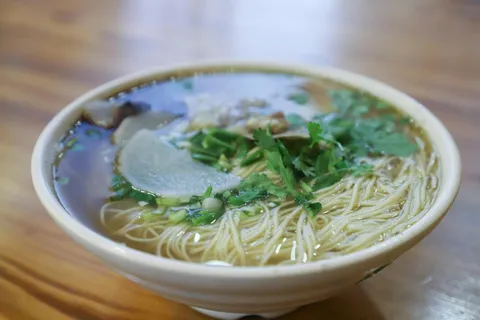
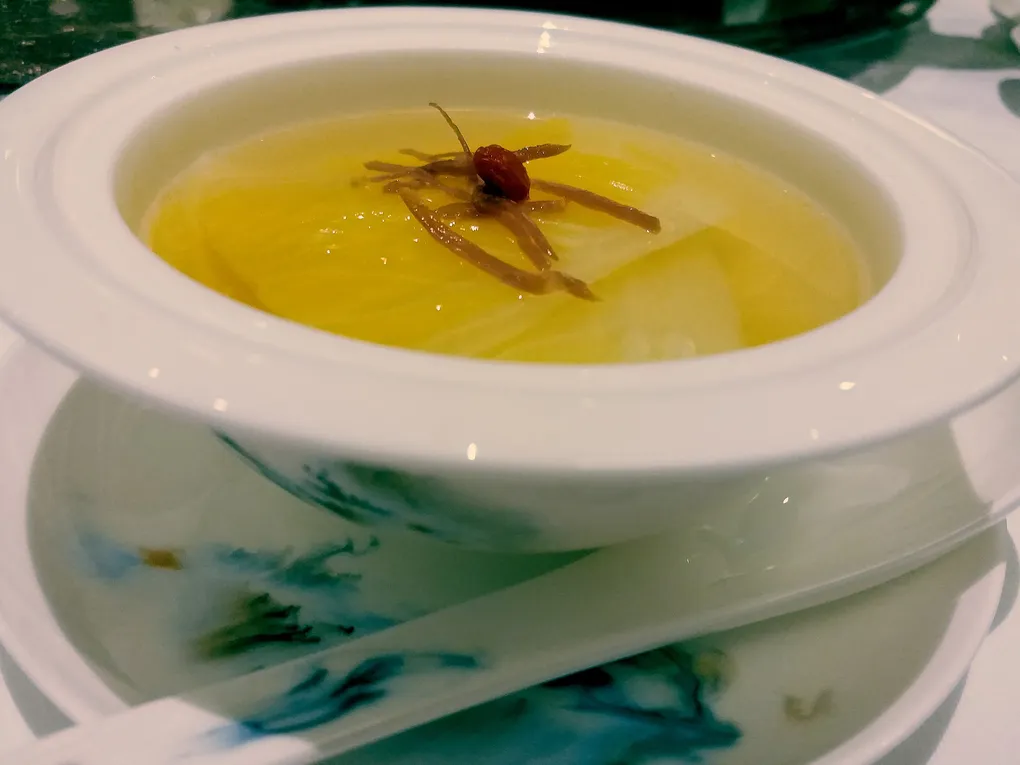
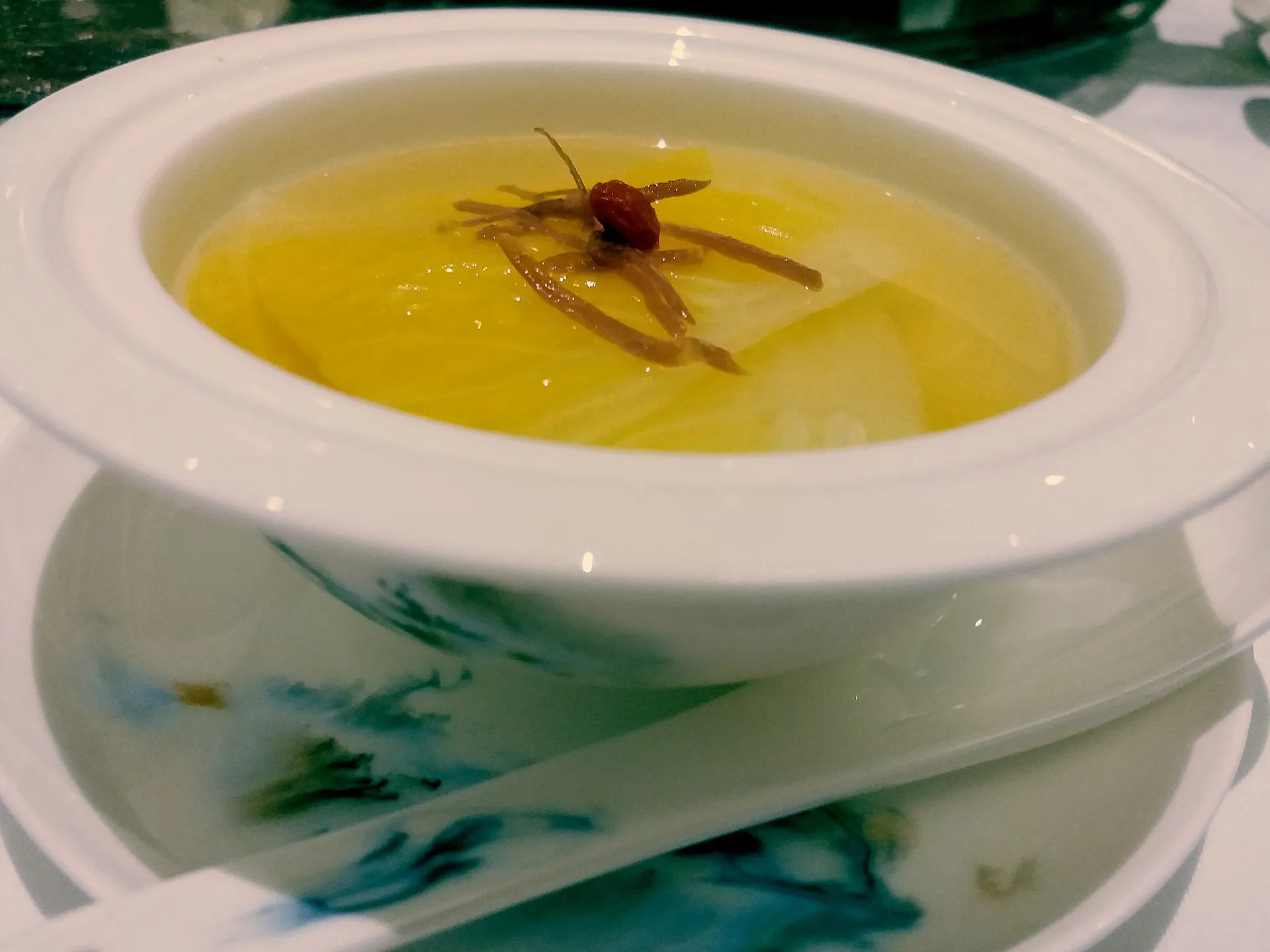 Boiling-water cabbage (开水白菜) — the signature of refined Sichuan banquet cooking: it looks like plain broth and tastes like a masterpiece. This is the Sichuan few visitors ever meet.
”Wait — isn’t Sichuan food just spicy?”
This is the first thing to unlearn. The old chefs had a saying: “一菜一格,百菜百味” — each dish its own style, a hundred dishes a hundred flavours. Classical Sichuan cuisine prizes range above all: sweet, sour, savoury, smoky, gently spiced, and yes, fiery — but the mark of a true master is the dishes with no chilli at all.
The most famous is boiling-water cabbage (开水白菜, kāishuǐ báicài) — a single cabbage heart floating in a consommé so clear it looks like water, but built from chicken, duck and ham simmered and clarified for hours. It’s the dish chefs use to prove themselves. Find it on a menu and you’ve found a kitchen that takes the old craft seriously.
The man: Zhang Yuanfu, the “cuisine obsessive”
Zhang Yuanfu is known in Chinese culinary circles as a “厨痴” — roughly, a cooking obsessive. He came to the profession late, in his thirties, and apprenticed under master Wang Kaifa (王开发) to learn the Lan school (蓝派) of Sichuan cuisine — the refined, banquet-style tradition.
That lineage is the whole point. It traces back to Rongleyuan (荣乐园), the most celebrated Sichuan banquet restaurant of the early 20th century, and its grandmaster Lan Guangjian (蓝光鉴), the man who codified high-end Sichuan cooking. One of Lan’s leading disciples was Zhang Songyun (张松云); Wang Kaifa came up in that same Rongleyuan tradition; and Zhang Yuanfu learned it from Wang. So when you eat at Songyunze, you’re tasting a craft passed hand-to-hand across four generations of master chefs — a living thread back to a golden age most of Sichuan cooking forgot.
Zhang is famous for his perfectionism, even obsessing over the vessels the food is served in — reviving old porcelain shapes because, in the Rongleyuan era, a great dish and a beautiful plate were inseparable.
The restaurant: Songyunze (松云泽)
Zhang opened Songyunze in 2017 together with his teacher Wang Kaifa. The name honours Zhang Songyun — both a tribute to the master and to the Rongleyuan house he carried forward. It sits not on a glitzy restaurant strip but inside a private courtyard villa in Chengdu, the kind of place you’d walk straight past if you didn’t know.
Inside, it works nothing like a normal restaurant:
- No à la carte, no main dining room. You book a private room and the kitchen builds a set banquet tailored in advance.
- The signature experience is the Songyun Banquet (松云宴) — a long, ordered procession of 20-plus courses that recreates the format, sequence and dishes of a Republic-era (1920s–30s) Sichuan banquet, many of which had all but disappeared.
- It’s slow, ceremonial dining — the opposite of a quick hotpot. Allow a full evening.
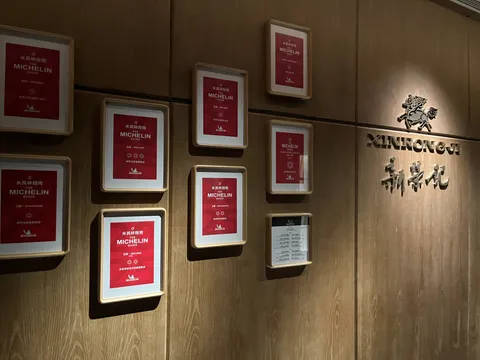
That devotion has earned it the recognition that matters: a coveted Michelin star in Chengdu’s Michelin guide and a place as a perennial Black Pearl diamond restaurant (China’s home-grown fine-dining list). The famed food critic Chua Lam (蔡澜) has sung its praises.
What you’ll actually eat
This is refined, technique-driven cooking, not a chilli endurance test. A banquet might move through dishes like:
- Boiling-water cabbage (开水白菜) — the crystal-clear consommé masterpiece described above.
- Chicken velvet “snowflake” (雪花鸡淖, xuěhuā jīnào) — chicken breast whipped with egg white and stock into a cloud-soft, snow-white purée; pure delicacy, zero heat.
- Odd-flavour chicken (怪味鸡丝, guàiwèi jīsī) — cold poached chicken under a “strange-flavour” sauce that balances sweet, salty, sour, numbing, spicy, savoury and nutty all at once. The name is a boast: every flavour, in harmony.
- Twice-cooked pork (回锅肉) — the everyday Sichuan classic, but rendered to textbook perfection: pork belly crisped to “lamp-shade” curls in fermented bean paste.
Yes, there are spiced dishes too — but you’ll leave understanding that great Sichuan food is about precision and balance, with chilli as one colour on a very wide palette.
Why this matters for your trip
If you’re visiting Chengdu and you love food, a place like Songyunze is a once-in-a-trip window into Sichuan’s true depth — the counterpoint to a night of street snacks and málà hotpot. It also sits at the heart of a broader, genuinely exciting story: China’s new wave of creative and heritage fine dining, where young and old-guard chefs alike are reinventing — and rescuing — regional traditions.
How to book
This is the catch for visitors. Because everything is set-menu and by private room, Songyunze takes reservations in advance only, often weeks ahead, and bookings are typically handled by phone or Chinese apps that need a Chinese mobile number. There’s no walk-in. Expect a serious per-person price befitting a multi-hour banquet of this calibre — confirm it when you book.
🤝 Can’t secure the table? If a restaurant like this needs a local phone number or a Chinese-only app, contact us and we can help arrange the reservation (a small service fee applies).
For the wider picture, cross-reference the Michelin guide to China and the Black Pearl guide — where both point to the same restaurant, book with confidence.
My honest take
You absolutely don’t need a banquet like this to eat brilliantly in Sichuan — some of your happiest meals will be a ¥30 bowl of dan dan noodles. But if you have one special dinner in you in Chengdu, this is the experience that will change how you think about Chinese food forever. It quietly proves that Sichuan’s greatest dish might be a bowl of clear soup — and that the most “modern” thing happening in its kitchens is the loving rescue of its own past. Pair it with my Sichuan cuisine guide and, if you don’t read Chinese, my notes on ordering without Chinese.
FAQ
Is all Sichuan food spicy? No. Classical Sichuan cuisine is famous for range — “a hundred dishes, a hundred flavours.” Many of its most prized banquet dishes, like boiling-water cabbage and chicken velvet, contain no chilli at all.
What is Songyunze (松云泽)? A celebrated Chengdu restaurant founded in 2017 by master chef Zhang Yuanfu, dedicated to reviving the refined, Republic-era Sichuan banquet tradition. It holds a Michelin star and is a long-running Black Pearl diamond restaurant, served as a set-menu banquet in private rooms.
Can foreign tourists eat at Songyunze? Yes, but it’s set-menu and by private room only, with no walk-ins. You must reserve in advance — often weeks ahead — usually by phone or a Chinese app that needs a local mobile number, so many visitors ask a hotel or concierge to book for them.