“Chinese food” is really dozens of distinct cuisines, each shaped by its climate, history, and local ingredients. The takeaway dishes you know back home barely scratch the surface. Here’s a traveller’s map to eating your way across China.
The big regional styles
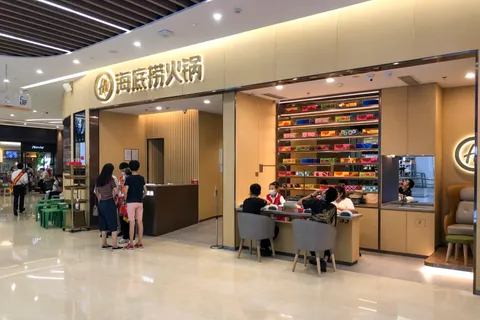
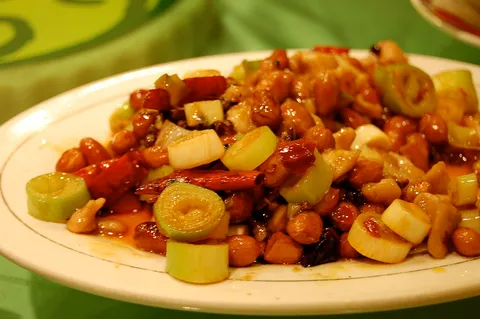
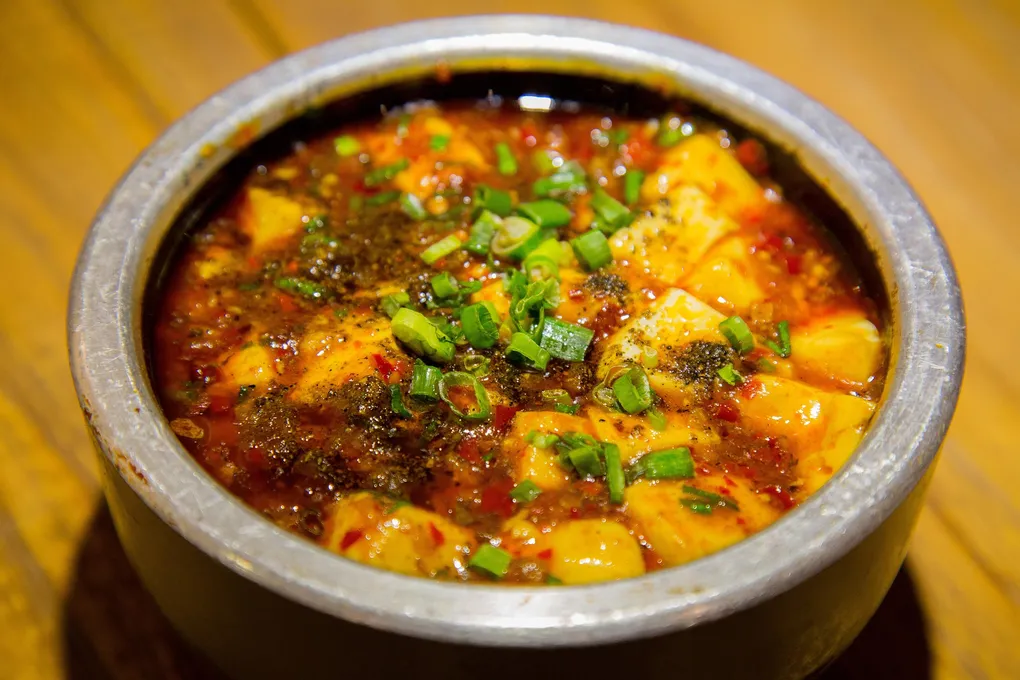
Sichuan (川菜, chuān cài) — sometimes written as Szechuan, bold and numbing-spicy. Home of hotpot and the famous málà (麻辣) tingle of Sichuan peppercorns. Try mapo tofu (má pó dòu fu, 麻婆豆腐), dan dan noodles (dàn dàn miàn, 担担面), and a bubbling hotpot (huǒ guō, 火锅) with friends. Best in Chengdu and Chongqing.
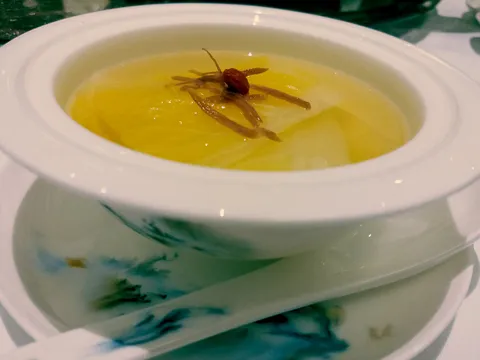
Cantonese (粤菜, yuè cài) — fresh and delicate. The cuisine of Guangzhou and Hong Kong, big on subtle flavours, seafood, and dim sum (diǎn xīn, 点心 — those little steamed and fried snacks). Roast goose (shāo é, 烧鹅) and char siu pork (chā shāo, 叉烧) are highlights.
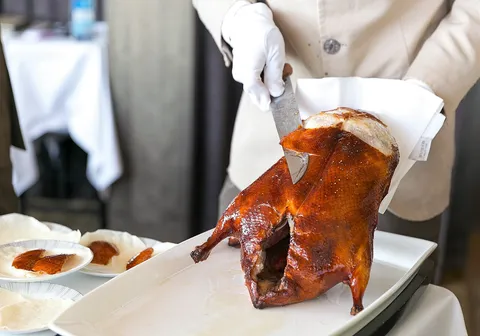
Northern (北方菜, běi fāng cài & 鲁菜) — hearty and wheat-based. Think Peking duck (běi jīng kǎo yā, 北京烤鸭), hand-pulled noodles (lā miàn, 拉面), dumplings (jiǎo zi, 饺子), and steamed buns (mán tou, 馒头). Wheat, not rice, is the staple up here.
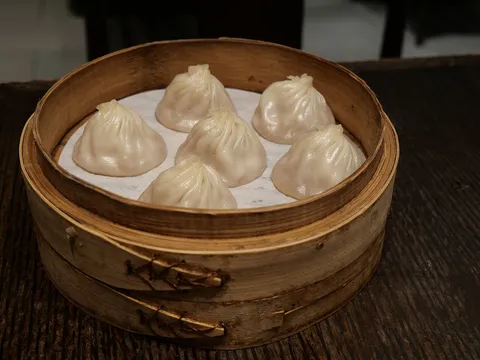
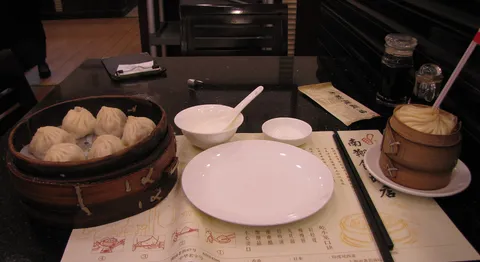
Huaiyang (淮扬菜, huái yáng cài & 本帮菜) — sweet and refined. Around Shanghai, Hangzhou, and Suzhou: gentle, slightly sweet dishes like xiaolongbao (soup dumplings, xiǎo lóng bāo, 小笼包), red-braised pork (hóng shāo ròu, 红烧肉), and shallot oil noodles (cōng yóu bàn miàn, 葱油拌面).
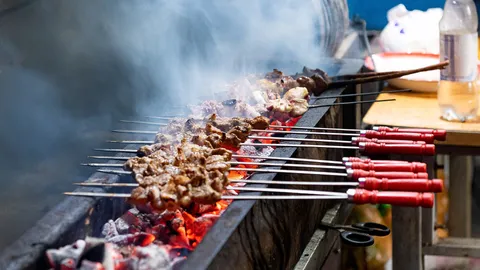
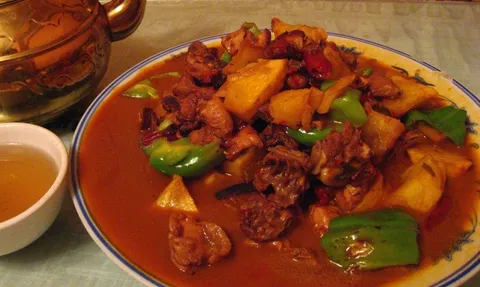
Xinjiang (新疆, xīn jiāng) — smoky and Central Asian. Cumin-spiced lamb skewers (yáng ròu chuàn, 羊肉串), hand-pulled laghman noodles (lā tiáo zi, 拉条子), and big-plate chicken (dà pán jī, 大盘鸡), reflecting the Muslim northwest.
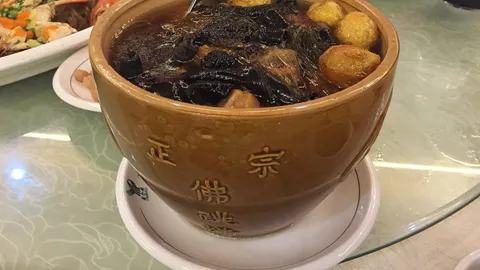
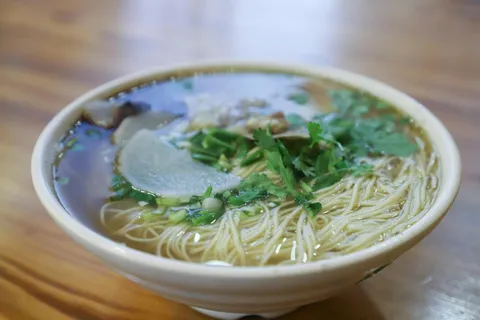
Yunnan & the southwest — herby and wild. Mushrooms, rice noodles (mǐ xiàn, 米线), and the famous “crossing-the-bridge” noodles (guò qiáo mǐ xiàn, 过桥米线), with strong Southeast Asian influences.
Dishes worth seeking out
- Soup dumplings (xiǎo lóng bāo, 小笼包) — pierce, sip the broth, then eat.
- Peking duck (běi jīng kǎo yā, 北京烤鸭) — crispy skin wrapped in thin pancakes.
- Hotpot (huǒ guō, 火锅) — cook your own at the table; a social must-do.
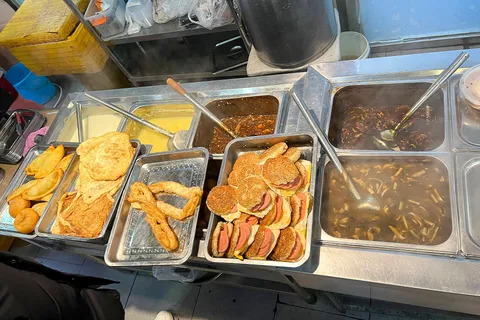
- Jianbing (jiān bing, 煎饼) — a savoury breakfast crepe from street carts.
- Baozi (bāo zi, 包子) — fluffy steamed buns with countless fillings.
Street food
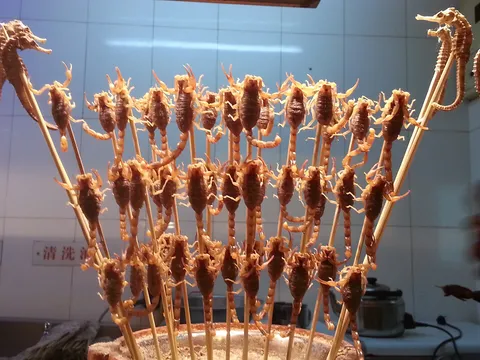
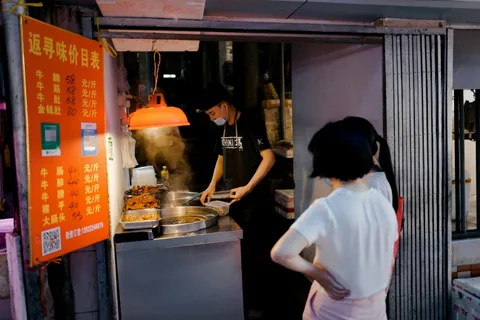
Some of the best, cheapest eating happens at night markets (yè shì, 夜市) and street carts. Look for busy stalls with high turnover — that’s the sign of fresh, safe food. Skewers (chuàn, 串), grilled corn, stinky tofu (chòu dòu fu, 臭豆腐 — for braver souls), and fresh fruit are everywhere.
How to find a good restaurant
Overwhelmed by choice and no strong preference? Two reliable strategies:
Head for a department store or shopping mall
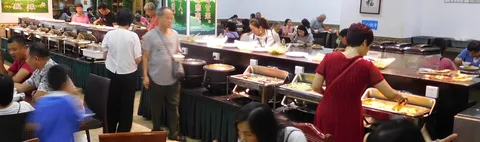
It sounds unglamorous, but the restaurant floors of big department stores and shopping malls (商场, shāng chǎng) are one of the safest bets in any Chinese city. The upper floors and basements are packed with a curated selection of well-known, reputable chains and restaurants spanning every cuisine — hotpot, Cantonese, Japanese, noodles, dessert. They’re clean, air-conditioned, have picture menus, often some English, take Alipay/WeChat Pay, and the mall’s brand acts as a quality filter. When you just want a dependable, good meal without research, this is it.
Use Dianping to scout
For something more specific, locals live by Dianping (大众点评) — China’s Yelp. It shows ratings, photos, price levels, popular dishes and queue times. Even if you can’t read much, the star ratings, photos and “must-order” tags get you a long way (and a translation app handles the rest). Sort by rating in your neighbourhood and you’ll rarely go wrong.
The catch:
popular restaurants need a reservation
Here’s what trips up a lot of visitors: the most popular restaurants often don’t accept walk-ins, especially at peak times. You’re expected to book ahead — usually through a Chinese app or by phone — and many booking systems require a Chinese phone number to confirm, which most tourists don’t have. Showing up hungry at a famous spot can mean a long wait or a flat “fully booked.”
🤝 Need a table at a hard-to-book place? If there’s a restaurant you have your heart set on but can’t reserve without a local number, contact us and we can help arrange the booking for you (a small service fee applies). Sometimes a single reservation is the difference between a great food memory and a missed one.
Tips
- Don’t be afraid of ordering without Chinese — apps and photo menus make it easy.
- Dishes are meant for sharing, ordered to the centre of the table.
- “Spicy” can mean very spicy — ask for mild (bù là, 不辣) if unsure.
Come hungry and curious, and China becomes one of the world’s great food destinations.