China’s dining scene has gone from “no Michelin Guide at all” to one of the most exciting in Asia in just a few years. Whether you’re planning a once-in-a-lifetime tasting menu or hunting an affordable, guide-approved noodle shop, here’s how the Michelin map of China looks today — and how to actually get a table.
⚠️ A note on accuracy: Michelin stars are reassessed every year and the full list runs to hundreds of restaurants. Treat the names below as a starting orientation, and always confirm the current rating and details on the official MICHELIN Guide site before you book.
Understanding the ratings (it’s not just stars)
The Guide uses several distinct marks — and the cheaper ones are often the most useful for travellers:
- ⭐⭐⭐ Three Stars — “exceptional cuisine, worth a special journey.” The pinnacle.
- ⭐⭐ Two Stars — “excellent cuisine, worth a detour.”
- ⭐ One Star — “high-quality cooking, worth a stop.”
- 🍴 Bib Gourmand — the traveller’s secret weapon: great food at a moderate price. This is where you find brilliant dumpling houses, noodle bars and local specialists for a fraction of a starred bill.
- 🌱 Green Star — recognises sustainability and responsible sourcing (Chengdu earned the guide’s first mainland Green Star in 2025).
- The Plate / Selected — simply “good cooking,” a Michelin inspector’s nod without a star.
If you’re budget-conscious, chase the Bib Gourmands — they’re the best value-for-quality eating in the whole guide.
Which cities are covered
The MICHELIN Guide in mainland China currently spans:
- Shanghai — the largest and longest-running selection.
- Beijing
- Guangzhou — the Cantonese-cuisine heartland.
- Chengdu — the Sichuan capital (now in its 4th edition).
- Hangzhou
- Jiangsu Province (new in 2025) — covering Nanjing, Yangzhou and Suzhou.
- Fujian Province (new in 2025) — the first province-wide selection, covering Fuzhou, Xiamen and Quanzhou (69 restaurants in its debut).
Hong Kong and Macau have their own long-established, separate guides — both worth a trip in their own right.
The three-star tables (the very top)
As of the 2025 selections, mainland China’s three-star restaurants are:
Shanghai
- Ultraviolet by Paul Pairet — a single-table, multi-sensory experience at a secret location; one of the most theatrical meals on earth.
- Taian Table — an intimate, ingredient-driven modern European counter.
Beijing
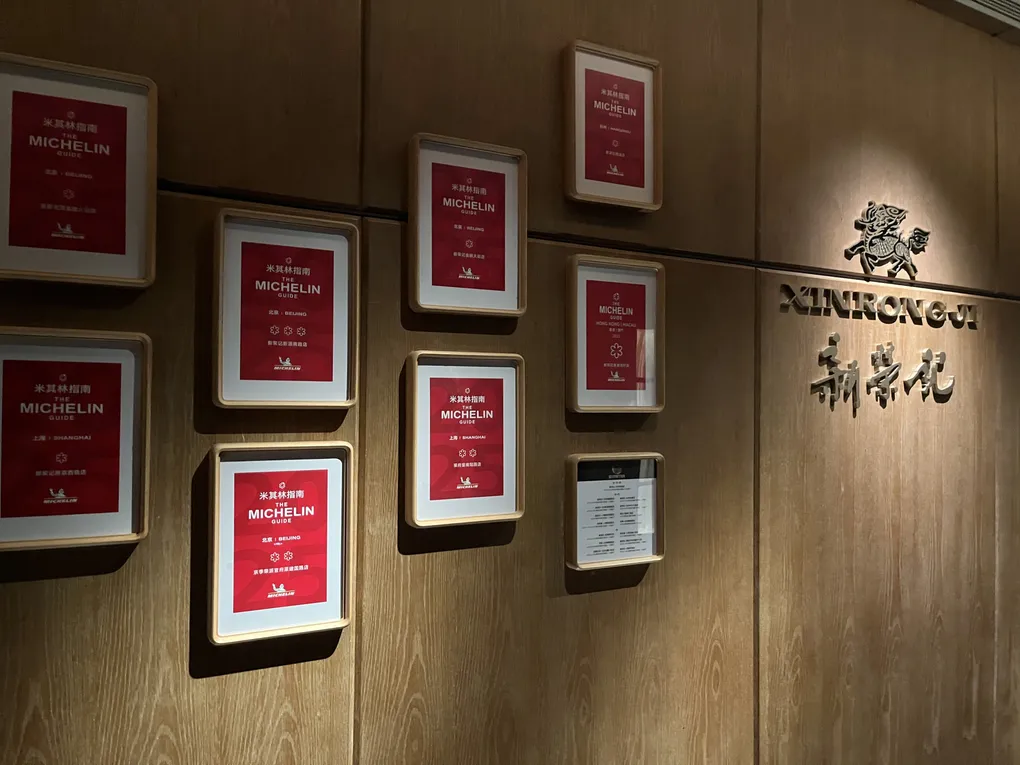
- Xin Rong Ji (Xinyuan South Road) — refined Taizhou cuisine; the celebrated group that, as I write about in my hidden-gem travelogue, began humbly in coastal Zhejiang.
- Chao Shang Chao — elevated, seasonal Chinese cooking.
Two stars (worth a detour)
As of the 2025 selection, the two-star ranks include:
- Shanghai — 8½ Otto e Mezzo Bombana, Da Vittorio, Fu He Hui (福和慧) (vegetarian), Imperial Treasure Fine Chinese Cuisine, Canton 8, Ji Pin Court, 102 House, Bao Li Xuan and more.
- Beijing — King’s Joy (京兆尹) (vegetarian, by the Lama Temple) and a small group of elevated Chinese and Cantonese rooms.
👉 Full, current two-star list: MICHELIN Guide — 2 Stars, China Mainland.
One star & Bib Gourmand:
the complete, always-current lists
Here’s the honest bit: there are hundreds of one-star and Bib Gourmand restaurants across China’s covered cities, and Michelin reshuffles them every year. Freezing them into a blog post would be both error-prone and out of date within months. So instead, here are the official, live, filterable lists — open one, then use the city filter at the top of the page to narrow to Shanghai, Beijing, Guangzhou, Chengdu, Hangzhou, Nanjing, Suzhou, Xiamen and the rest:
- ⭐⭐⭐ Three Stars
- ⭐⭐ Two Stars
- ⭐ One Star — the largest starred tier; dozens per major city.
- 🍴 Bib Gourmand — the value list (read on).
- 🍽️ The full selection — every recommended restaurant, including “Selected” / The Plate.
Bookmark these — they’re the single source of truth, updated the day each new guide drops.
A selected one-star sampler
A few one-star names worth knowing (always reconfirm the current rating on the official page):
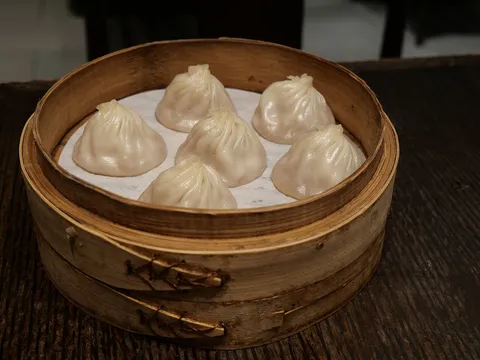
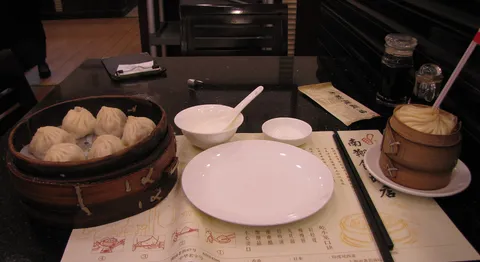
- Wu You Xian (屋有鲜) — the first dim sum / xiaolongbao restaurant ever to earn a Michelin star in Shanghai (2025); soup dumplings raised to fine-dining precision. (Also on my favourite Chinese dishes list.)
- Liyuan (丽苑) — refined, classic Cantonese cooking (Guangzhou).
- Xin Rong Ji (新荣记) — exquisite Taizhou/Zhejiang seafood; the group whose Beijing flagship holds three stars (more in my hidden-gem travelogue).
- Seventh Son (家全七福) — old-school Cantonese banquet cooking from the famed Fook Lam Moon lineage.
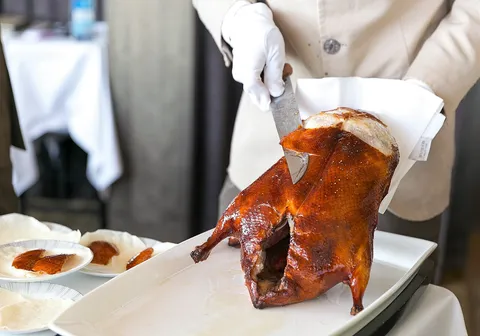
- Da Dong (大董) — celebrated for its lean, ultra-crisp signature roast duck and modern Chinese plating.
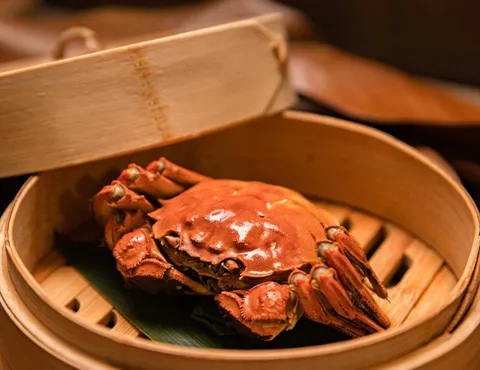
- Cheng Long Hang Crab King’s Mansion (成隆行蟹王府) — a temple to hairy crab and Shanghainese classics.
- Huishijia (惠食佳) — beloved Guangzhou Cantonese, famous for its clay-pot pepper crab.
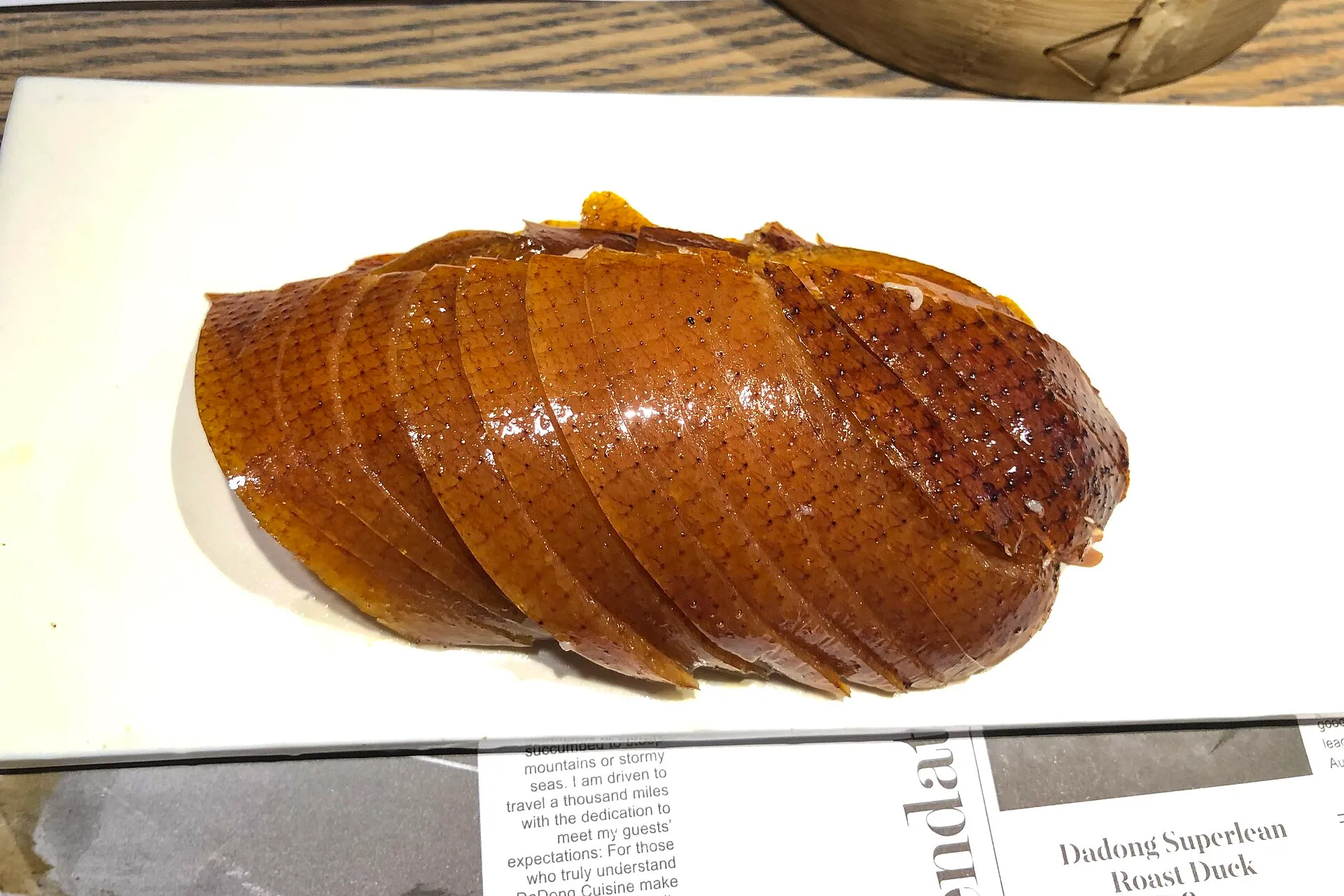 Da Dong’s signature super-lean Peking roast duck.
Shanghai’s one-star tier alone runs to around 40 restaurants spanning Cantonese, Huaiyang, Sichuan and modern Chinese — and it genuinely shifts year to year. Browse the current set via the one-star list above and filter by city.
Bib Gourmand:
Michelin quality for the price of a casual lunch
If you take one thing from this article, make it this: the Bib Gourmand list is the best-value eating in the entire guide. Michelin awards it to places serving genuinely excellent food at a modest price — and in China that bar is set low in the best way.
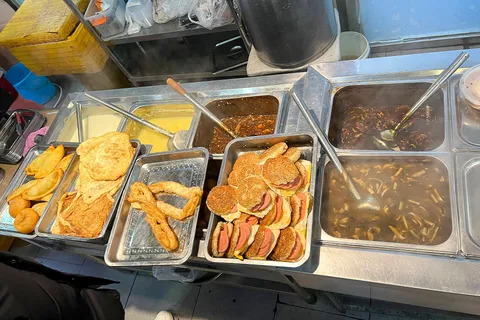
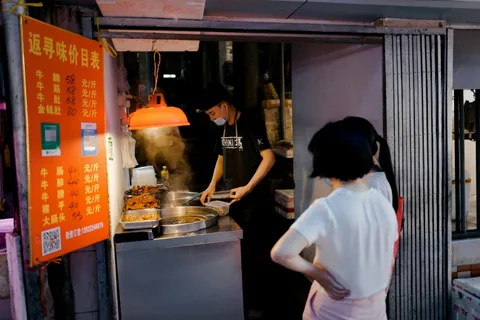
- Many Bib Gourmand spots are noodle bars, dumpling houses, wonton shops, soup-and-rice diners and local-snack specialists — exactly the food China does best.
- You can routinely eat at one for well under $15 a head — and at plenty of them, under $10 — for cooking an inspector judged among the best in the city.
- They’re casual, fast and unpretentious: no dress code, no tasting-menu commitment, often just a queue and a counter.
A selected Bib Gourmand sampler
A taste of what’s on the list (from the latest selections — always reconfirm on the official page):
Beijing (from ~21 Bib Gourmand spots)
- Gong De Lin (功德林) — historic Shanghainese-style vegetarian.
- Lao Chuan Ban (老川办) — the legendary Sichuan provincial-office canteen.
- Pang Mei Noodles (胖妹面庄) — cult fiery Chongqing noodles.
- No. 69 Fangzhuanchang Zhajiangmian — old-school Beijing bean-sauce noodles.
- Niujie Halal (Man Heng Ji) — classic Niujie halal cooking.
- Bao Yuan (宝源) — famous for rainbow-coloured dumplings.
- Tong He Ju (同和居) — time-honoured old-Beijing dishes.
Shanghai (from ~35 Bib Gourmand spots)
- Jingmei Wuxi Noodle Shop (Jing’an) — sweet, savoury Wuxi-style noodles.
- Rongjia Noodle Soup with Yellow Croaker — the iconic Shanghai croaker-and-noodle bowl.
- Bai Nian Hun Tun — century-old wonton specialist.
- …plus a deep bench of noodle, wonton, congee and local-snack shops.
It’s the closest thing to a cheat code for travellers: Michelin-recognised flavour, street-food prices. Pull up the Bib Gourmand list, filter to your city, and pick the one nearest you — you almost can’t go wrong. (Cross-check with Dianping for photos and opening hours.)
How to actually book
This is the part that catches visitors out:
- Starred restaurants book up weeks ahead, and many take reservations only through Chinese apps or by phone — often requiring a Chinese phone number to confirm.
- Some of the very top tables (Ultraviolet especially) sell tickets/seatings well in advance and can sell out months out.
- A few luxury-hotel restaurants will take bookings by email or through your hotel concierge — the easiest route for tourists.
🤝 Can’t secure the booking? If there’s a Michelin table you’re set on but the reservation needs a local number or Chinese-only app, contact us and we can help arrange it for you (a small service fee applies).
My honest advice
Don’t feel you have to chase three stars to eat brilliantly in China — some of the best meals of your trip will be street food and Bib Gourmand spots. But if a special-occasion dinner is part of your trip, China now delivers world-class fine dining, often at prices that undercut Europe or the US. Pair this with my regional food guide and you’ll eat very, very well.