China is one of the safest places you can travel, but the language barrier is real — and the moment something goes wrong (a missed train, a lost bag, a payment that won’t work), the first question is usually “who can I ask?” The good news: in the big cities there’s more English-speaking help than you’d expect. Here’s where to find it.
🏙️ The big caveat first: almost everything below applies to major cities — Beijing, Shanghai, Guangzhou, Shenzhen, Chengdu, Hangzhou and other big hubs. Step into a smaller city or the countryside and English help thins out fast. There, your phone and a translation app become your lifeline — so set those up before you go.
At the airport:
look for the volunteers
Major Chinese international airports station information desks and volunteers (often students or retirees in branded vests/sashes) specifically to help travellers. They can:
- Point you to the right terminal, train or taxi rank.
- Help you find the metro/airport-rail ticket machines.
- Translate a quick question or call ahead for you.
Look for “i” Information counters and anyone in a volunteer vest near arrivals. Airport staff at the big hubs are increasingly used to foreign visitors, and signage is bilingual.
Your hotel is your best help desk
This is the tip I give everyone: in any city, your hotel front desk is your single most useful English resource. Reception at international-standard and business hotels usually speaks at least some English, and they’ll happily:
- Write your destination in Chinese for a taxi driver.
- Call a restaurant, attraction or your phone provider on your behalf.
- Explain a problem to a driver, vendor or official over the phone.
Even if you’re not staying there, a polite ask at a big hotel lobby often gets you pointed in the right direction.
The police:
helpful, and English-equipped in big cities
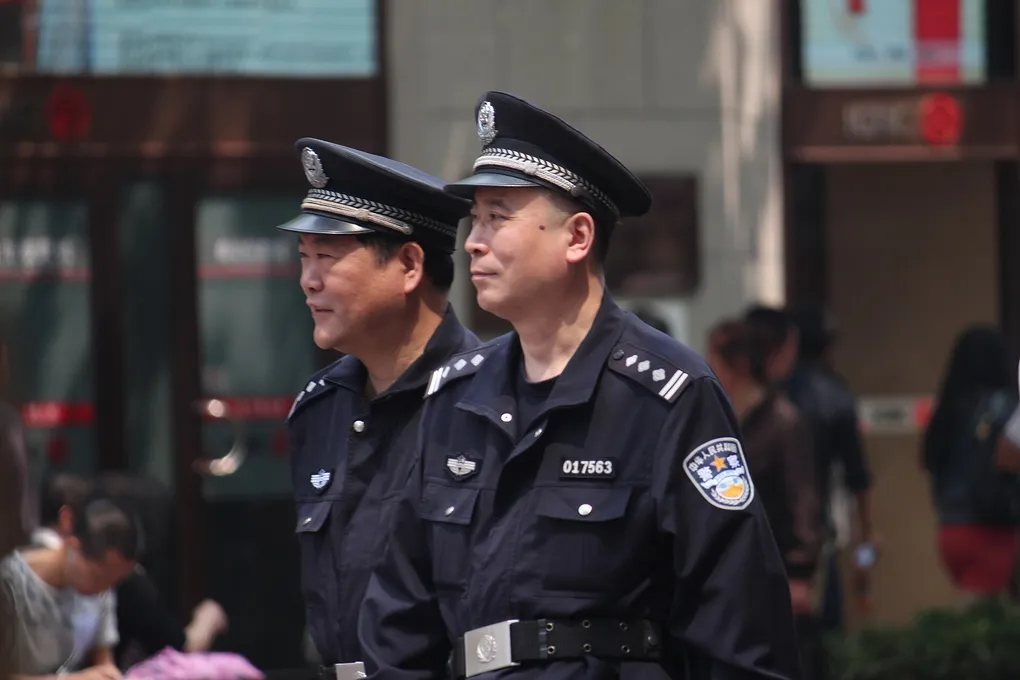
Chinese police (公安 / 警察) are approachable and used to helping tourists, especially in the major cities. A few things worth knowing:
- Big cities have tourist police or English-capable officers in central districts, transport hubs and around major attractions. On Shanghai’s Nanjing Road or Beijing’s Wangfujing, you’ll see them patrolling.
- For anything lost, stolen or involving documents, the police can produce the report you’ll need for insurance or a replacement passport.
- They can call a translator line if needed — and many younger officers speak basic English.
Outside the big cities, the local 派出所 (neighbourhood police station) will still help, but expect to rely on a translation app to communicate.
Useful numbers & hotlines
- 110 — police (emergencies and general help)
- 120 — ambulance / medical emergency
- 119 — fire
- 12301 — the national tourism hotline, with English-language assistance
- 12345 — city government service hotline (some have English options in big cities)
Save these in your phone before you travel. For 110/120, having a local or hotel staffer help relay details is ideal if your Chinese is limited.
When all else fails:
your phone
In a country where English help is patchy outside the metros, technology is the great equaliser:
- A good translation app (with the Chinese language pack downloaded for offline use) handles most day-to-day stumbles.
- Show, don’t tell: screenshots of your destination, your hotel’s address card, and the Chinese name of what you need will get you further than spoken English.
- Your embassy or consulate (most are in Beijing, Shanghai, Guangzhou, Chengdu, Shenyang and Wuhan) is the backstop for serious problems like a lost passport.
The bottom line
In the big cities, you’re rarely more than a few steps from someone who can help in English — an airport volunteer, a hotel receptionist, or a friendly officer. Lean on them without hesitation; helping visitors is genuinely part of the culture in China’s tourist-facing cities. Just remember that this safety net is a big-city luxury — venture further afield and your phone does the talking.