China’s metros are the easiest, cheapest way to get around its cities — modern, spotless, frequent, and signed in English. A typical ride costs just ¥2–7. Here’s everything you need.
Paying for rides
You have three easy options:
- Alipay / WeChat metro QR (easiest). Open the app, add the local “Metro/Transit” mini-program once, and scan the QR at the gate to enter and exit. No card, no cash. (payments guide)
- Single-journey ticket from a station machine — switch it to English, pick your destination station, pay by cash or QR, and collect a token or card.
- Rechargeable transit card — worth it for longer stays; buy and top up at the station.
Finding your way
- Signs and announcements are bilingual (Chinese + English) in nearly every city.
- Use Amap or Apple Maps for door-to-door routing, including which exit to take — exits matter, as stations can be huge with exits hundreds of metres apart.
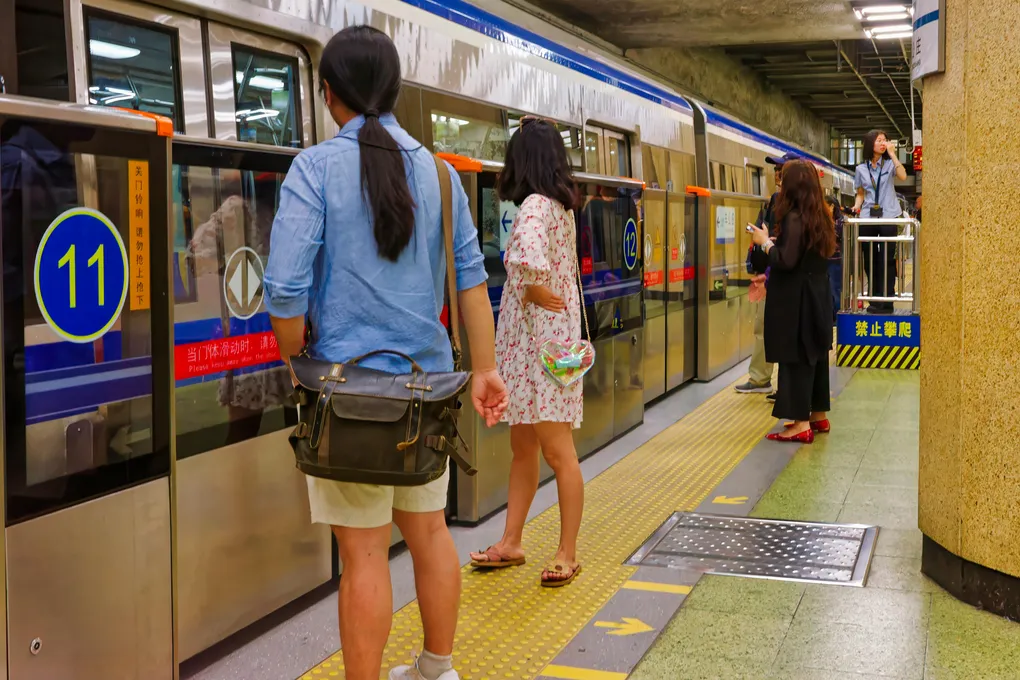
- Lines are colour-coded and numbered, just like any metro.
Going through the gates
- Security check first — every station X-rays bags on entry; have your bag ready.
- Tap or scan your QR/card at the gate to enter.
- Tap or scan again to exit — fares are distance-based, so you pay on the way out.
Tips
- Avoid rush hour (roughly 7:30–9:30am and 5:30–7:30pm) — major-city metros get extremely packed.
- Keep your phone charged — if you’re paying by QR, a dead phone means no ride. Carry a power bank.
- Stand right, walk left on escalators.
- Last trains are usually around 10:30–11:30pm; check if you’re out late and switch to Didi.
- Keep some water handy but note eating and drinking is discouraged or banned on many systems.
- Remember which exit to take to reach your destination.
Master the QR-code entry and you’ll glide across any Chinese city for the price of a coffee.