Watch the arrivals hall at Suvarnabhumi and you’ll see it: a particular look on Western faces, somewhere between relief and giddiness. Bangkok does something to visitors from London, Berlin or Sydney that few cities manage. I felt it too. But I kept asking myself a question that turned this trip into something more interesting than a checklist: why do Westerners love Bangkok so much? The answer, I think, is less about Bangkok and more about what the West is missing.
The “Land of Smiles” meets a culture of judgement
The West — especially northern Europe and the Anglosphere — runs on a quiet machinery of evaluation. Are you productive? On time? Optimising? We’re raised to assess and be assessed. Bangkok feels like the machine switching off.
Two Thai concepts do most of the heavy lifting here:
- Sanuk (สนุก) — the idea that an activity is worth doing only if there’s some pleasure or fun in it. Work, errands, dinner: all better with a little sanuk. To a culture that treats fun as a reward you earn after the work, this is quietly radical.
- Mai pen rai (ไม่เป็นไร) — roughly “never mind, it’s fine, let it go.” Spilled your drink, missed the boat, mangled the language? Mai pen rai. For visitors wound tight by Western perfectionism, hearing it again and again is like being given permission to exhale.
Add the famous Thai social grace — kreng jai, the instinct to avoid causing others discomfort or loss of face — and you get a place that feels, to a Westerner, astonishingly non-judgemental. Nobody is auditing you. That’s intoxicating.
Buddhism, lightness, and the absence of guilt
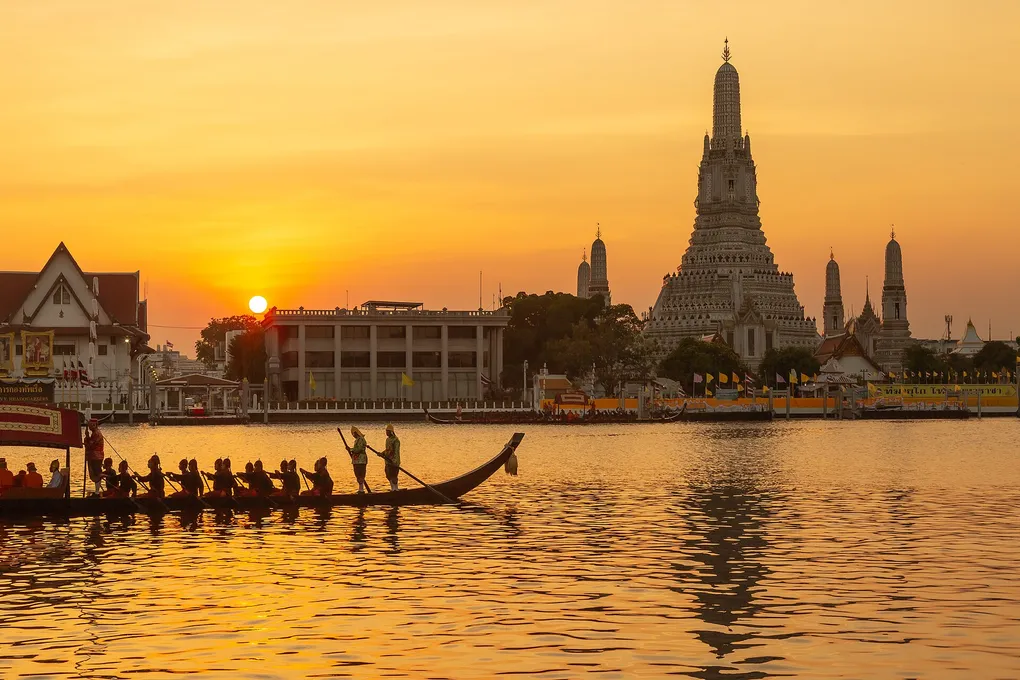
A lot of Western culture is shaped, even for the non-religious, by a Judeo-Christian frame: guilt, sin, the moral weight of choices. Thai Theravada Buddhism carries a different texture — impermanence, acceptance, merit-making, an easier relationship with pleasure. You see it in the gilded calm of Wat Pho or Wat Arun at dawn, and you feel its echo on the street: a lightness, a lack of moralising.
For travellers, this reads as freedom. The same city offers a 6 a.m. alms-giving to saffron-robed monks and a riotous night on Khao San Road, and holds no apparent contradiction between them. The West tends to split the sacred and the indulgent; Bangkok lets them share a street.
The honest part:
escapism and its shadows
I want to be candid, because a real cultural read can’t just flatter. Some of the Western love for Bangkok is escapism, and not all of it is innocent.
- The cheapness that feels like liberation to a visitor reflects a real income gap — your freedom is partly built on someone else’s wage.
- The “anything goes” reputation has a darker history in the nightlife economy, and a strand of tourism that treats the city as a permissioned playground deserves scrutiny, not romance.
- “Non-judgement” can shade into a tourist’s licence to behave in ways they never would at home. The Thai grace that makes you feel welcome is not the same as approval.
Loving a place honestly means seeing this too. The best version of the Bangkok love affair is the one that stays a guest — curious, respectful, spending where it helps — rather than a consumer of other people’s tolerance.
And yes — the food, the comfort, the sheer ease
None of the deeper stuff would land without the surface pleasures, and Bangkok’s are world-class:
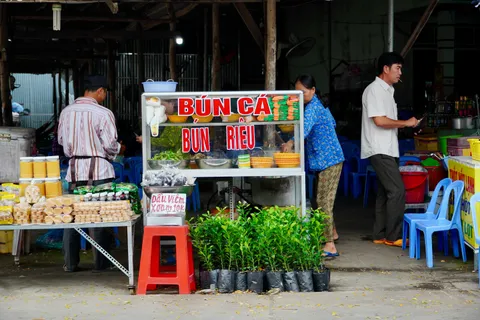
- Street food as a way of life — boat noodles, som tam, grilled skewers, mango sticky rice — eaten on a stool for a couple of dollars.
- Astonishing comfort for the price — five-star rooms, rooftop bars over a glittering skyline, ruthless air-conditioning, a 7-Eleven on every corner.
- Frictionless travel — the BTS Skytrain, cheap Grab rides, widespread English, a tourism machine that simply works.
The West idealises “effortless living”; Bangkok actually delivers a version of it, at least for the visitor.
What Bangkok held up to me
In the end I don’t think Westerners love Bangkok because it’s exotic. I think they love it because it gently contradicts the rules they grew up with — that fun must be earned, that mistakes are failures, that pleasure needs justifying. The city says mai pen rai and means it.
The trick, I came to feel, is to take the lesson home rather than just the holiday. Learn the lightness; leave the entitlement. That’s the difference between loving Bangkok and merely using it.