I came to Hanoi to eat, and Hanoi did not disappoint. This is a city where the best food is cooked on a plastic stool on the pavement, where breakfast is a steaming bowl of noodles and the coffee is somehow also dessert. I left a few kilos heavier, a little wiser about street scams, and already plotting a return.
Breakfast is a bowl of pho
There is no better way to start a Hanoi morning than a bowl of pho at a hole-in-the-wall that’s been making it the same way for forty years. You perch on a tiny stool, the broth fogs your glasses, and the whole thing costs less than a coffee back home. I had it almost every day and never tired of it.
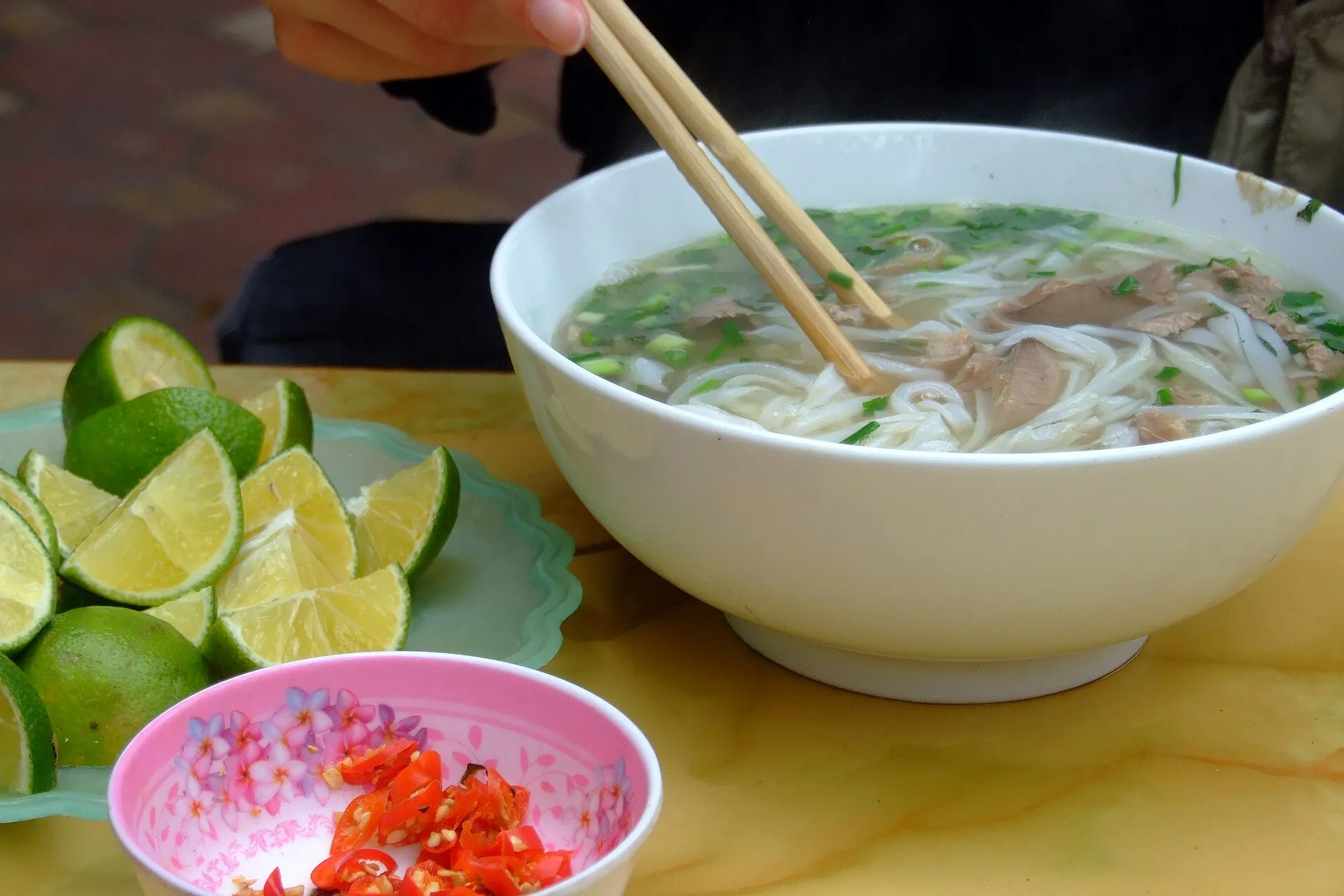 Hanoi pho bo — a clear, deeply beefy broth and a daily breakfast ritual.
North vs south:
the same dish, two philosophies
Pho is from the north, and Hanoi’s version is the purist’s: a clear, deeply beefy broth, a touch wider noodles, and very little fuss on top — just spring onion, maybe a few raw onion slivers. The flavour is up front in the broth itself, and you season sparingly at the table.
Travel south to Saigon (Ho Chi Minh City) and the same dish changes character. Southern pho is sweeter and more aromatic, and it arrives with a whole side plate of garnishes — Thai basil, bean sprouts, lime, sawtooth herb, and bottles of hoisin and sriracha to swirl in. It’s brighter, busier, more customisable.
Here’s the honest tip for Western visitors: if you grew up eating pho in Europe (or North America), what you know is almost certainly the southern style — that’s the version the post-war Vietnamese diaspora carried abroad, hoisin squeeze and all. So a first bowl of austere northern Hanoi pho can feel surprisingly plain at first. Give it a few spoonfuls before reaching for the chilli; the restraint is the point, and it grew on me fast. (If you miss the herbs and sauces, you’ll feel right at home the moment you head south.)
Bun cha:
the dish I think about
If pho is the soul of Hanoi breakfast, bun cha is the lunch I still dream about: smoky grilled pork patties and slices in a bowl of sweet-sour fish-sauce broth, with a pile of rice vermicelli, fresh herbs and a basket of nem (fried spring rolls) on the side. You dunk and assemble it yourself.
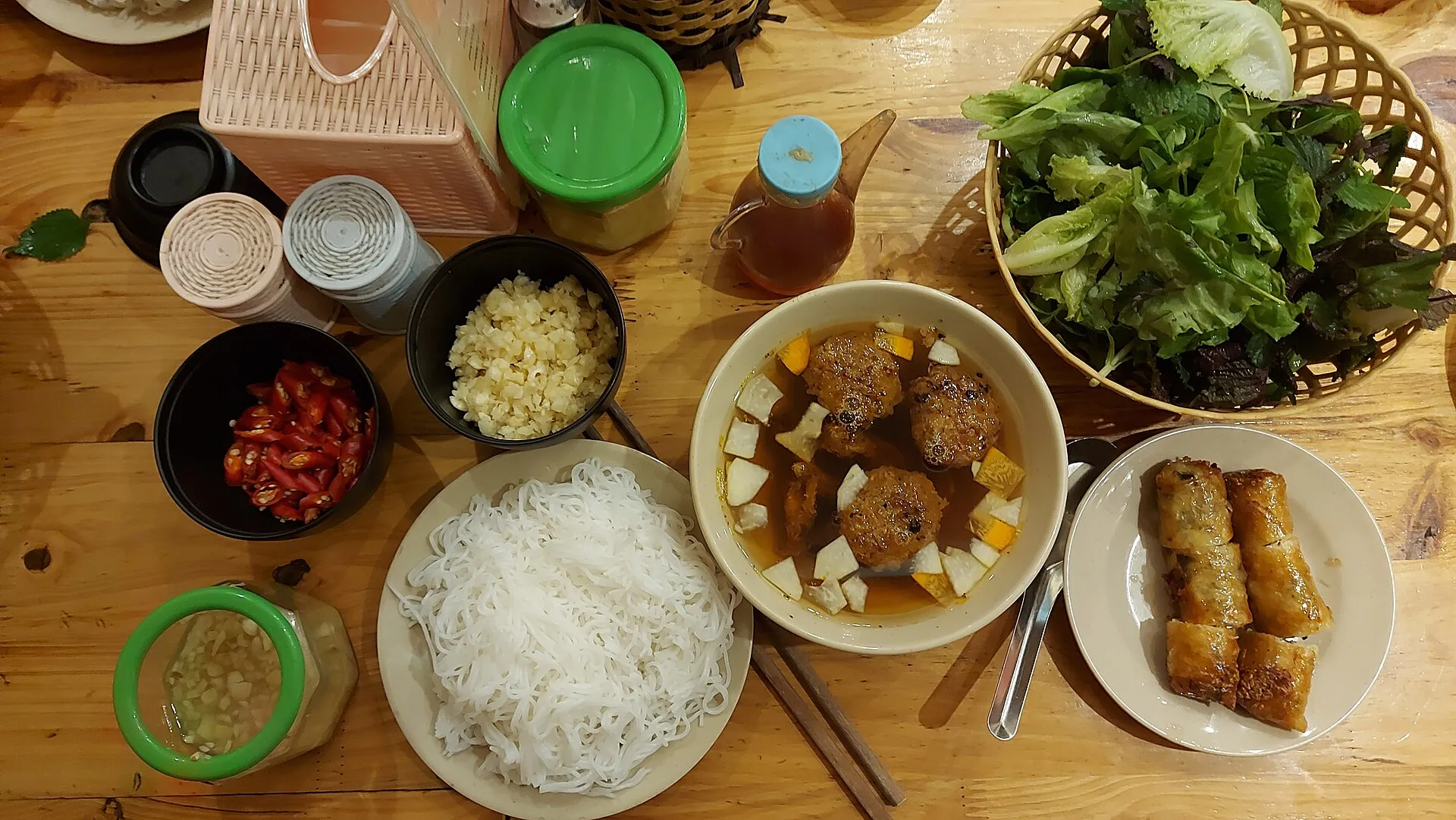 Bun cha — smoky grilled pork in sweet-sour broth, with vermicelli, herbs and nem.
It’s famously the meal Anthony Bourdain shared with President Obama on plastic stools in Hanoi — and once you’ve had a proper one, you understand exactly why they looked so happy.
Egg coffee, and the rest of the coffee rabbit hole
Then there’s egg coffee (cà phê trứng) — a Hanoi invention where whipped egg yolk and condensed milk are beaten into a sweet, custardy foam and floated on strong, dark coffee. It sounds strange and tastes like tiramisu in a cup. The historic Cafe Giang claims to have created it; sip it warm on an upstairs balcony over the Old Quarter.
Don’t stop there: cà phê sữa đá (iced coffee with condensed milk) is the everyday fuel, and you’ll also find coconut coffee and the city’s growing specialty scene.
The rest of the edible greatest hits
- Bánh mì — the baguette legacy of French Indochina, stuffed with pâté, pork, pickles and herbs.
- Bún bò Nam Bộ — dry rice-noodle salad with stir-fried beef, peanuts and crispy shallots.
- Chả cá — turmeric-marinated fish sizzled tableside with dill and spring onion.
- Bia hơi — fresh, cheap draft beer on the curbside corners of Tạ Hiện (“Beer Street”), the perfect end to an eating day.
The coconut that conned me
Here’s the part I have to be honest about. One hot afternoon near Hoan Kiem Lake, a smiling woman in a conical hat with a shoulder-pole of fruit gestured for me to try carrying her gánh (the bamboo yoke). Tourists love the photo; I did too. She plonked the hat on my head, balanced the pole on my shoulder, snapped a few pictures on my own phone — lovely, friendly, all smiles.
Then she hacked open a coconut, pressed it into my hands, and the mood changed. Suddenly there was a price — and it was many times what a coconut should cost. The friendliness evaporated into firm, loud insistence until I paid just to extract myself. Classic, and I walked straight into it.
How to enjoy the vendors without the sting:
- If someone hands you their pole, hat or any fruit “for a photo,” assume it isn’t free. Smile, say no thanks, and keep your hands empty.
- Agree the price before anything is opened, peeled or given to you — and have small notes ready.
- It’s usually a few dollars, not a mugging. Pay if you must, don’t let it sour your day, and treat it as the price of a story.
I don’t even resent it. The shoulder-pole vendors are part of what makes Hanoi Hanoi; I just learned to admire them from behind my own coconut, bought from a stand with a price on it.
Why Hanoi stays with me
Most of my best memories of the city are sensory and cheap: the clatter of stools, the motorbike rivers you learn to part by simply walking, the broth steam, the egg-coffee foam. Hanoi rewards the hungry and the curious — just keep one hand on your wallet when the coconuts come out.