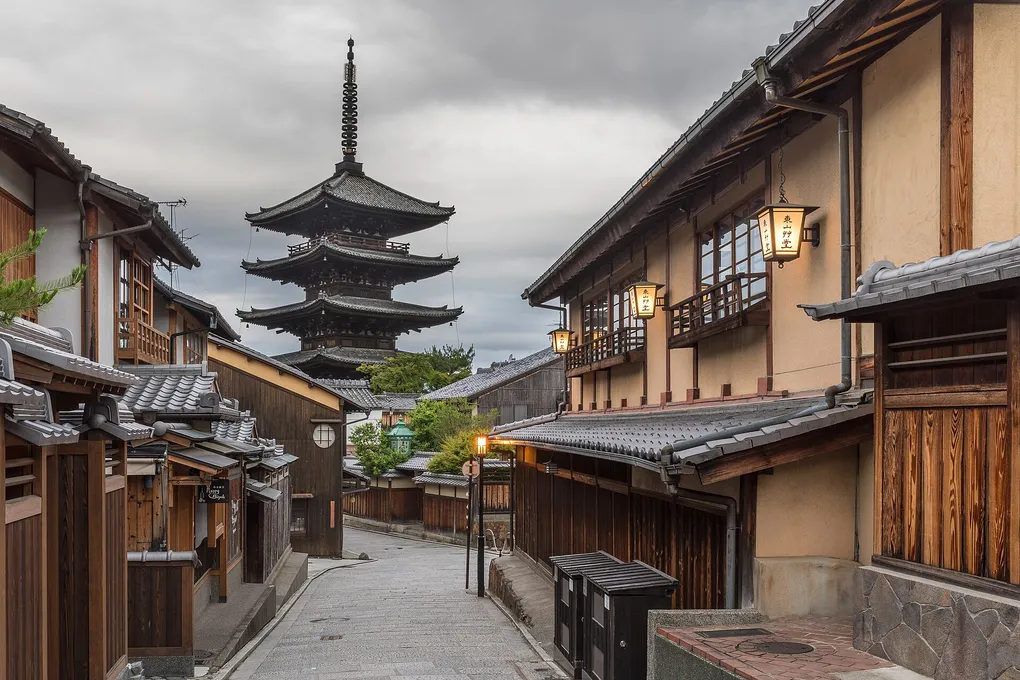
Kyoto is the city everyone reaches for when they picture “old Japan” — and it delivers, completely. But what stayed with me wasn’t only the temples. It was how casually the thousand-year-old and the brand-new sit side by side, often on the same narrow street. No matter how many times I visited Kyoto, it’s never enough for me.
The contrast that defines the city
Walk five minutes in Kyoto and you cross centuries. A moss-quiet temple garden gives way to a glass-fronted concept store; a geiko hurries past a convenience store in the lantern-lit lanes of Gion; the soaring wooden stage of Kiyomizu-dera looks out over a skyline pinned by the candy-coloured Kyoto Tower. Nobody seems to find this strange. The city doesn’t preserve its past behind glass — it just keeps living next to it.
That tension is the whole charm. You can spend the morning in a 17th-century Zen garden and the afternoon in a minimalist coffee bar that wouldn’t look out of place in Copenhagen, and both feel completely, authentically Kyoto.
A surprising coffee city
Here’s what no one tells you: Kyoto is obsessed with coffee. It has two coffee cultures running in parallel.
- The old kissaten. Retro wood-panelled coffee houses like Inoda Coffee and Smart Coffee have been serving thick, dark brews and morning sets for decades. Sitting in one, newspaper-rustling regulars all around, feels like stepping into Showa-era Japan.
- The new wave. Then there’s the design-forward third-wave scene — % Arabica (the Higashiyama branch, with the pour-over counter framing a pagoda view, is the postcard), Weekenders Coffee tucked behind a parking lot in a traditional machiya, and Kurasu. Precise, beautiful, very Instagram.
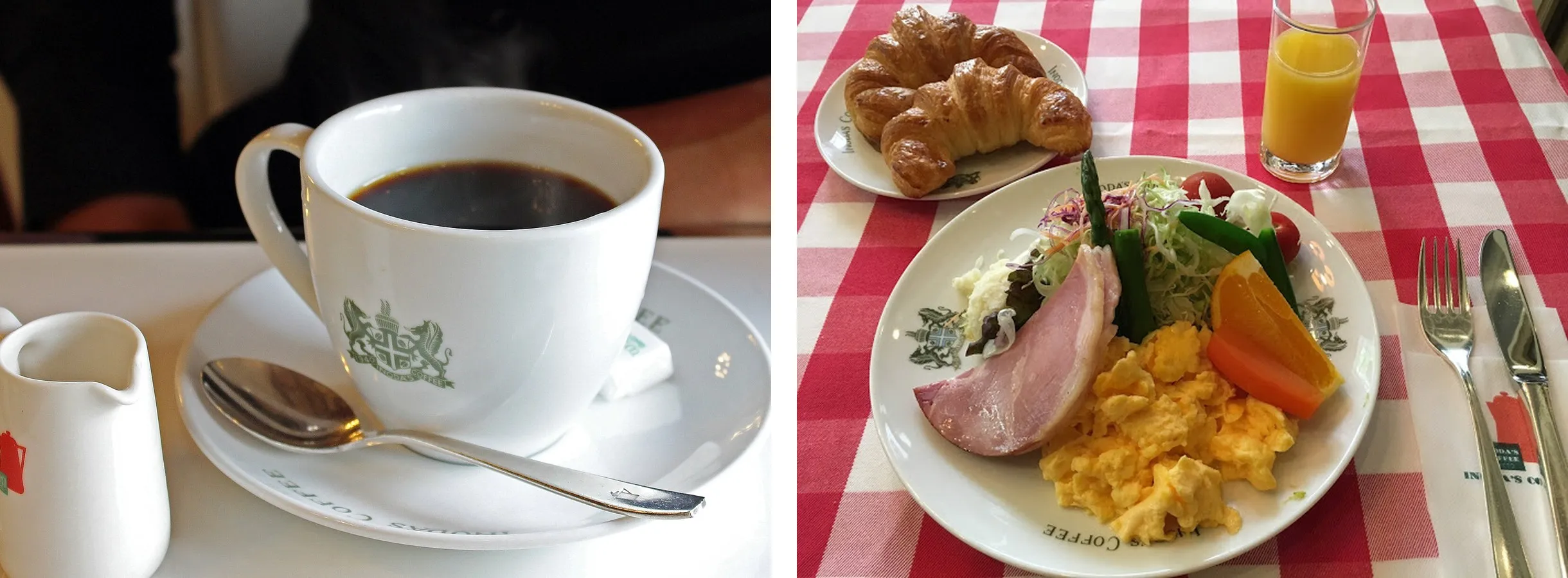 Inoda Coffee — the signature brew (left) and the classic kissaten morning set (right).
I’d do one of each in a day. They’re two halves of the same coffee-loving soul.
The bakeries (yes, really)
Kyoto quietly eats more bread per household than almost anywhere in Japan, and the bakeries are extraordinary.
- Le Petitmec — playful, bright, excellent viennoiserie.
- Flip Up! — neighbourhood favourites worth the detour, superb bagel.
- Shinshindo — near Kyoto University, one of the country’s oldest French-style bakeries; the original is a beautiful, well-worn room.
Grabbing a warm pastry and a coffee, then eating it on a riverside bench along the Kamogawa, was one of my happiest, simplest mornings there.
Pastry & sweets:
matcha meets the patisserie
The dessert scene splits the same way as the coffee — tradition and import, both done seriously.
- Malebranche for the cult Cha no Ka matcha-and-white-chocolate cookies.
- Gion Tsujiri and Nakamura Tokichi (in nearby Uji) for proper matcha parfaits and warabi-mochi.
For the French side, Kyoto hides two patisseries serious dessert people make the trip for:
- ASSEMBLAGES KAKIMOTO (アッサンブラージュ カキモト) — a tiny, jewel-box chocolaterie-patisserie where each cake and bonbon is built like a little piece of architecture. Refined, precise, and quietly one of the best in the city.
- Grains de Vanille (グラン・ヴァニーユ) — opened by a former student of the legendary Hidemi Sugino, and it shows: delicate, classical French gâteaux made with that same exacting, restrained hand. The lineage alone is worth the detour, and the cakes deliver on it.
The meal I’d fly back for:
Omi beef at Yakiniku Dokoro Hiro
If you do one splurge in Kyoto, make it Yakiniku Dokoro Hiro (京の焼肉処 弘) for Omi beef (近江牛).
Omi beef, from neighbouring Shiga prefecture, is one of Japan’s three great wagyu — and arguably its oldest, with a history going back centuries. At Hiro you grill it yourself over charcoal, slice by marbled slice, and the difference is absurd: it practically dissolves, rich and sweet and clean. Order a selection of cuts, go slow, and let the staff guide you on timing. It was, hands down, the best meal of the trip — and the most quintessentially modern-Kyoto experience too: an ancient regional ingredient, served with quiet, exacting craft.
What Kyoto taught me
Most cities make you choose — the historic version or the contemporary one. Kyoto refuses. It hands you a temple and a flat white, a centuries-old beef and a perfect croissant, and lets you have all of it at once. That refusal to pick a side is exactly why I’d go back tomorrow.