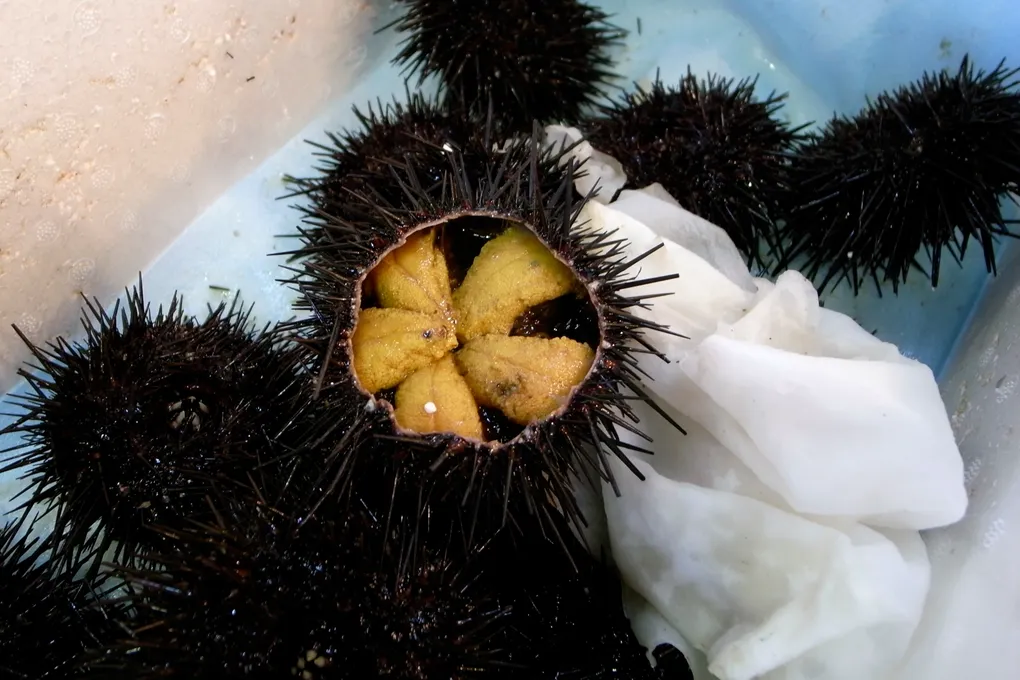
Some cities you visit for the buildings, some for the views. Dalian I came back for the seafood — and gave it exactly one day to prove itself. By nightfall I’d eaten my way from a fish market at dawn to a plate of dumplings at a corner shop, and I’d happily do the whole loop again tomorrow.
Dalian sits on the tip of the Liaodong Peninsula, where the Bohai and Yellow Seas meet, jutting into cold, clean northern water. That cold is the whole secret. Slow-growing shellfish, firm flesh, sweet clams — northerners will tell you, only a little smugly, that this is the best seafood in China. After a day here I wasn’t going to argue.
Breakfast where the boats land:
the morning market
Start where the locals shop, not where the tourists eat. I went early to a neighbourhood seafood market — rows of bubbling tanks, polystyrene boxes packed with ice, and aunties in rubber aprons who have been sorting clams since before sunrise. The famous one is Heishijiao Seafood Market (黑石礁海鲜市场) on the west side, but every district has its own.
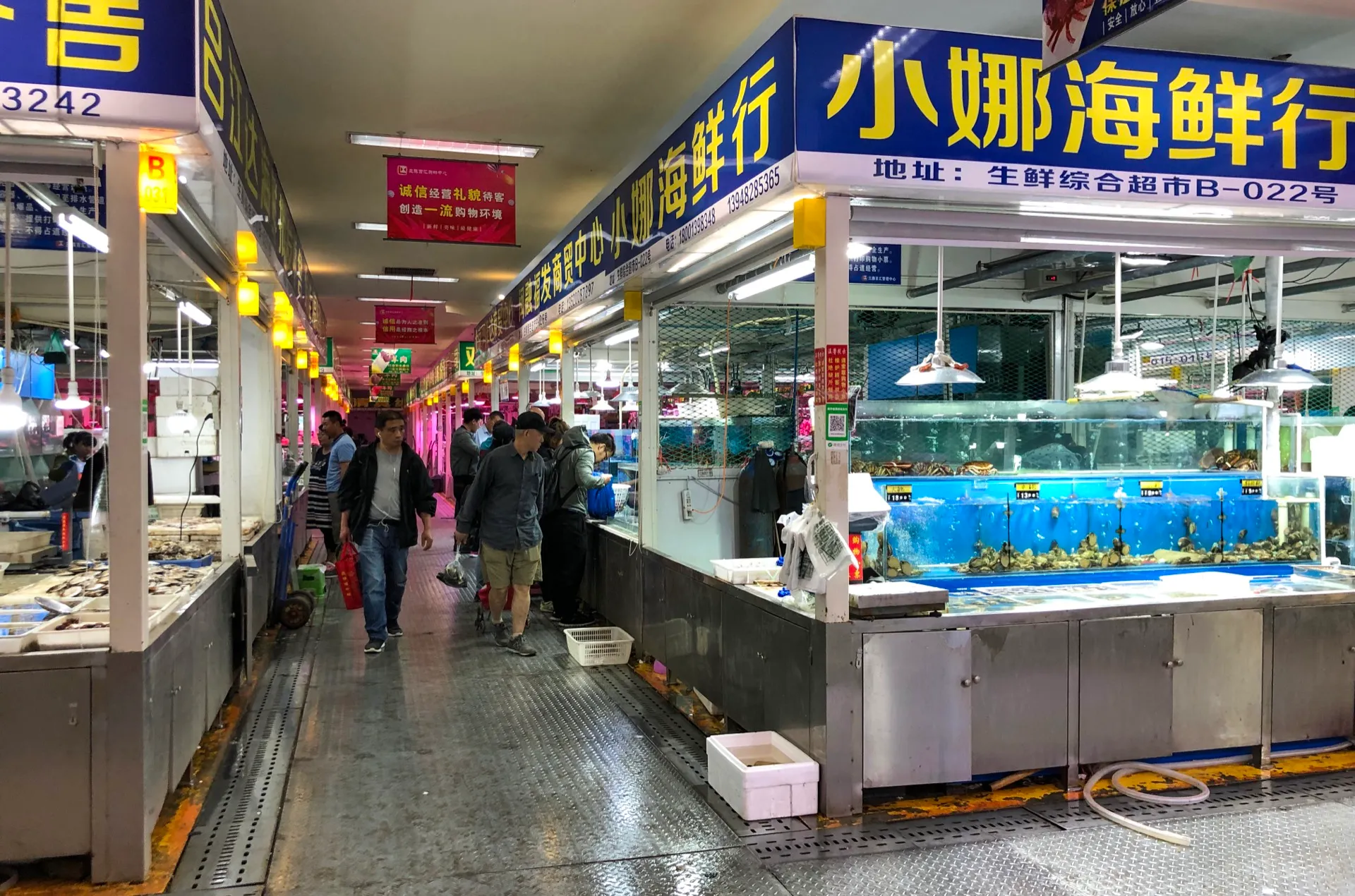 A neighbourhood seafood market — where the locals shop and the day’s eating begins.
Two things to know before you go in:
- You can buy and eat on the spot. Pick your seafood live from a stall, and many markets have a jiagong (加工) cooking station upstairs or next door that’ll steam, stir-fry or grill it for a small per-dish fee. This is the cheapest great seafood meal you will ever have.
- Watch the scale. The one thing that catches visitors out is the weighing — a few stalls are quick with a heavy thumb. Ask the price per jin (500g) first, watch it go on the scale, and you’ll be fine. Locals do exactly the same; it’s not paranoia, just market etiquette.
I pointed at a pile of mantis shrimp (皮皮虾) and a bag of clams (蚬子), handed them to the cooking stall, and had breakfast within twenty minutes: shrimp steamed plain so the sweetness comes through, clams flashed with garlic and chilli. Eaten standing up, fingers everywhere. Perfect.
The local obsession:
sea cucumber
If Dalian has one signature ingredient, it’s sea cucumber (海参) — specifically the prized spiky cishen from these cold waters. It’s not pretty, and it tastes of almost nothing on its own; the whole point is texture (springy, gelatinous) and what northerners believe it does for you. It’s tonic food, health food, the thing you bring your parents.
You’ll see it everywhere: braised whole in dark sauce, sliced into millet congee, or — the classic Dalian breakfast flex — a single sea cucumber swallowed first thing in the morning with a spoon of honey. I tried the sea cucumber and millet porridge (海参小米粥), which is the gentle way in: silky congee, one whole sea cucumber sitting in it like a secret. I won’t pretend I was converted, but I get it now.
Lunch: the spread
For the big sit-down meal I let a local friend order, which is the move — Dalian seafood restaurants reward someone who knows what’s in season. What landed on the table:
- Spanish mackerel dumplings (鲅鱼饺子). The dish I’d come back to Dalian specifically for. Fresh mackerel scraped off the bone, minced with a little pork and chives into an almost custardy filling, wrapped fat and boiled. They taste of the sea but clean, not fishy. Genuinely one of the best dumplings in China and you basically can’t get them done right anywhere else.
- Steamed flower clams and razor clams, in their own juice.
- Grilled scallops with garlic and glass noodles (蒜蓉粉丝扇贝) — a national favourite, but here the scallops are plump and local.
- Sea urchin (海胆), eaten raw with a tiny spoon, briny and creamy.
- Salt-baked conch (海螺), dug out with a toothpick.
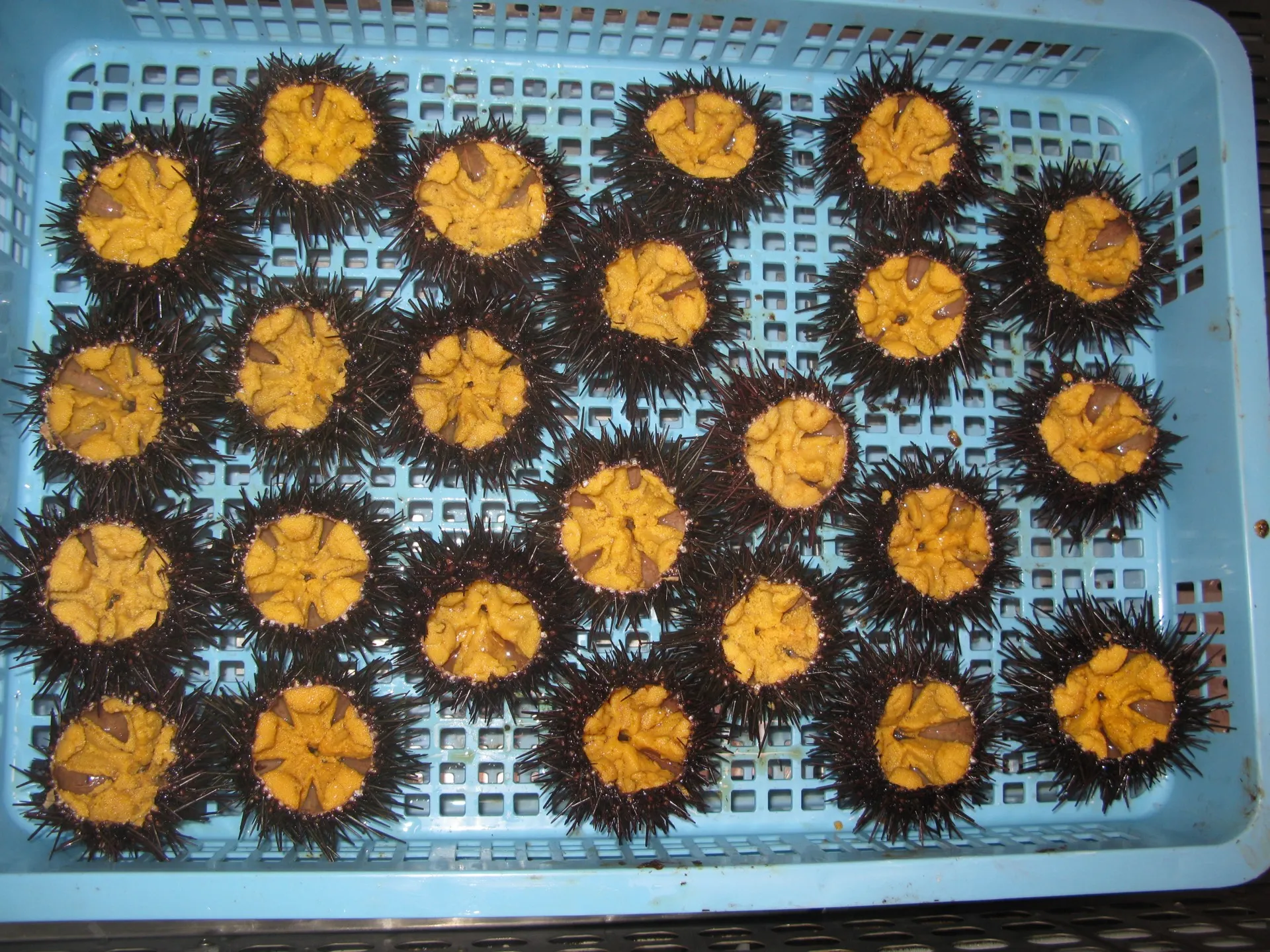 A whole tray of just-opened urchins — this is how fresh the roe gets by the cold northern sea.
The style here is restraint. Northern seafood cooking trusts the ingredient — steam it, a touch of garlic, maybe scallion and ginger, and get out of the way. After a few rounds of heavy food elsewhere in China, the lightness of a Dalian table is a genuine relief.
The street snack nobody warns you about:
menzi
Walk it off along the coast and you’ll smell menzi (焖子) before you see it — Dalian’s beloved street snack and, oddly, not seafood at all. It’s a sweet-potato or mung-bean starch jelly, cut into cubes and pan-fried until the outside crisps and the inside stays wobbly, then drowned in sesame paste, garlic water and soy. Crunchy, gooey, savoury, cheap. Every local has a stall they’re loyal to. It’s the thing I didn’t expect to love and then thought about for the rest of the trip.
 Menzi (焖子) — fried starch jelly, gooey inside, drowned in sesame paste, garlic water and chilli.
Walking between meals:
the coast road
You cannot eat continuously for twelve hours — believe me, I tried — so Dalian helpfully strings its food along a genuinely beautiful coastline. The Binhai Road (滨海路) coastal walk winds along cliffs and little beaches with the sea always on one side. Xinghai Square (星海广场), one of the largest city squares in the world, is good for a sea breeze and a sit-down. And the trams — Dalian still runs charming old-fashioned ones — are a pleasure in themselves.
 Xinghai Square (星海广场) — one of the largest city squares in the world, and a good place to walk off lunch.
 One of Dalian’s old-fashioned trams — still running, and a small pleasure between meals.
These aren’t really detours from the eating. They’re the digestion that makes the next meal possible.
Dinner & the salty finish
By evening I wanted one more sit-down, lighter this time: a bowl of seafood noodles, more grilled scallops, and a plate of the local salted dried fish with a corn cake (咸鱼饼子) — proper old-Dalian home food, salty fish you tear into a rough, slightly sweet cornmeal pancake. Peasant food, fisherman food, and exactly what you want after a long day on your feet by the sea.
Would one day do it justice?
Honestly, no — and that’s the point. One day in Dalian is enough to fall for the place and nowhere near enough to eat it all. I never made it to the famous abalone, the sea intestine (海肠) the next province over fights them for, or half the seasonal shellfish my friend kept naming. But that’s a reason to come back, not a regret.
If you only have a single day on China’s northeast coast, spend it the way I did: start at a market, let a local order lunch, never skip the menzi, and keep the sea in view between every meal. Dalian rewards an empty stomach more than almost anywhere I’ve been.
Cover photo: a fresh sea urchin by Naotake Murayama, CC BY 2.0, via Wikimedia Commons. Seafood market hall by N509FZ (CC BY-SA 4.0); tray of opened urchins by Qwert1234 (public domain); menzi by JesseW900, and Xinghai Square and the Dalian tram by CEphoto / Uwe Aranas and Kentaro Iemoto respectively (all CC BY-SA) — all via Wikimedia Commons.