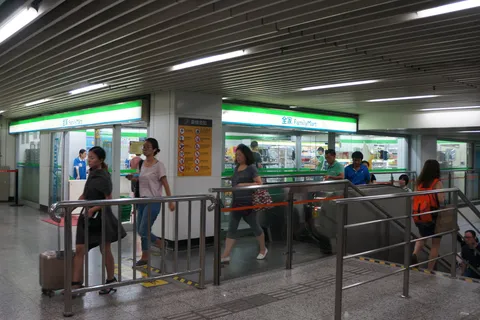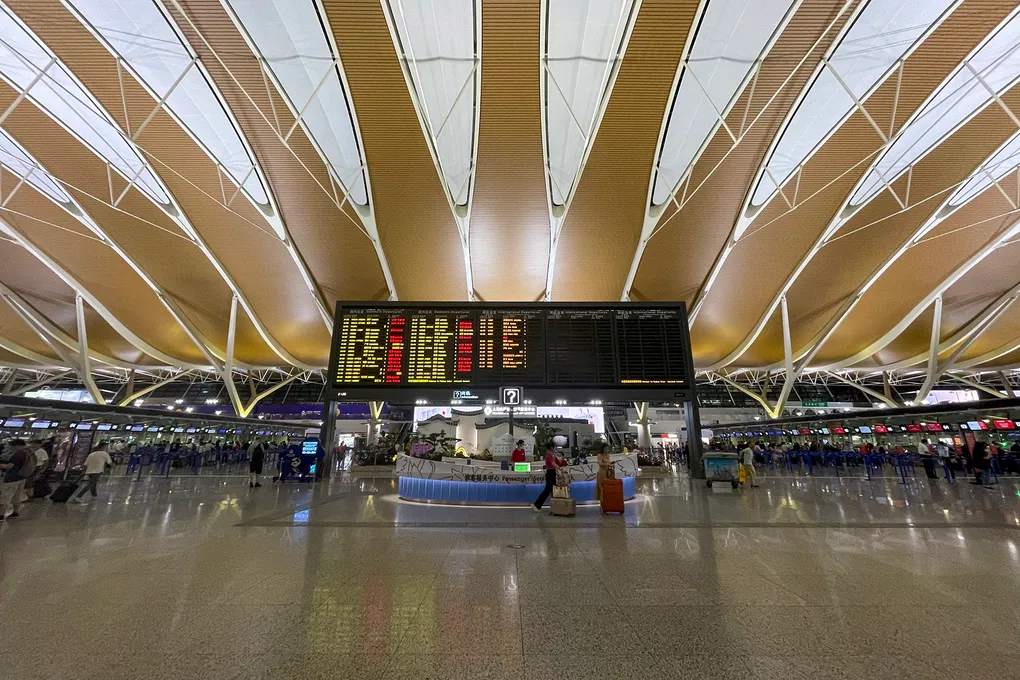
Terminal 2 is the big international terminal at Shanghai Pudong (PVG) — where most foreigners fly out from. The good news: eating and shopping here is genuinely easy, even if you never learned a word of Chinese. Picture menus, self-order kiosks with an English button, and Alipay/WeChat Pay everywhere mean your last few hours in China can be a relaxed graze rather than a scramble.
Here’s how to make the most of it — a final bowl of noodles, some smart duty-free, and your leftover yuan well spent.
Quick orientation: how T2 is laid out
PVG Terminal 2 stacks neatly across three levels:
- Level 3 — Departures. Check-in, security, then the airside concourses (gates C and D).
- Level 2 — Arrivals and a public food/shop area.
- Level 1 — Ground transport (metro, Maglev, taxis, airport transfer).
For eating and buying, the only distinction that matters is before security (“landside”) vs after security and immigration (“airside”). The bulk of the duty-free and the more interesting food sits airside, so the simple play is: check in, clear security and emigration early, then take your time eating and shopping near the gates.
One thing first-timers miss: most international flights actually board from the Satellite Hall (S2), a couple of minutes beyond the main building on a free underground APM train. A lot of the best food and shops live out there too, so don’t bolt straight to your gate — just leave a little buffer for the transfer.
Eat before security (landside)
If you have hours to kill or want cheaper, more local food, eat on the public departures floor (Level 3) or the arrivals level before you go through:
- Yonghe King (永和大王) — Chinese fast food and a proper sit-down breakfast: soy milk, fried dough sticks (youtiao), congee, dumplings. The most “China” meal on the cheap.
- COSTA / Starbucks — reliable coffee; the arrivals-level Starbucks runs 24 hours.
- McDonald’s and other familiar chains for a no-surprises bite.
- Tai Hing (太兴) — Hong Kong-style roast meats, milk tea and rice plates.
Insider tip: food is usually a little cheaper landside, and there’s more genuinely Chinese choice. If you’re not in a rush, eat your real meal before security and just grab a coffee or snack airside.
Eat after security (airside) — the main event
Once you’re through to the gates, the options open up. This is where most travellers have their last proper meal.
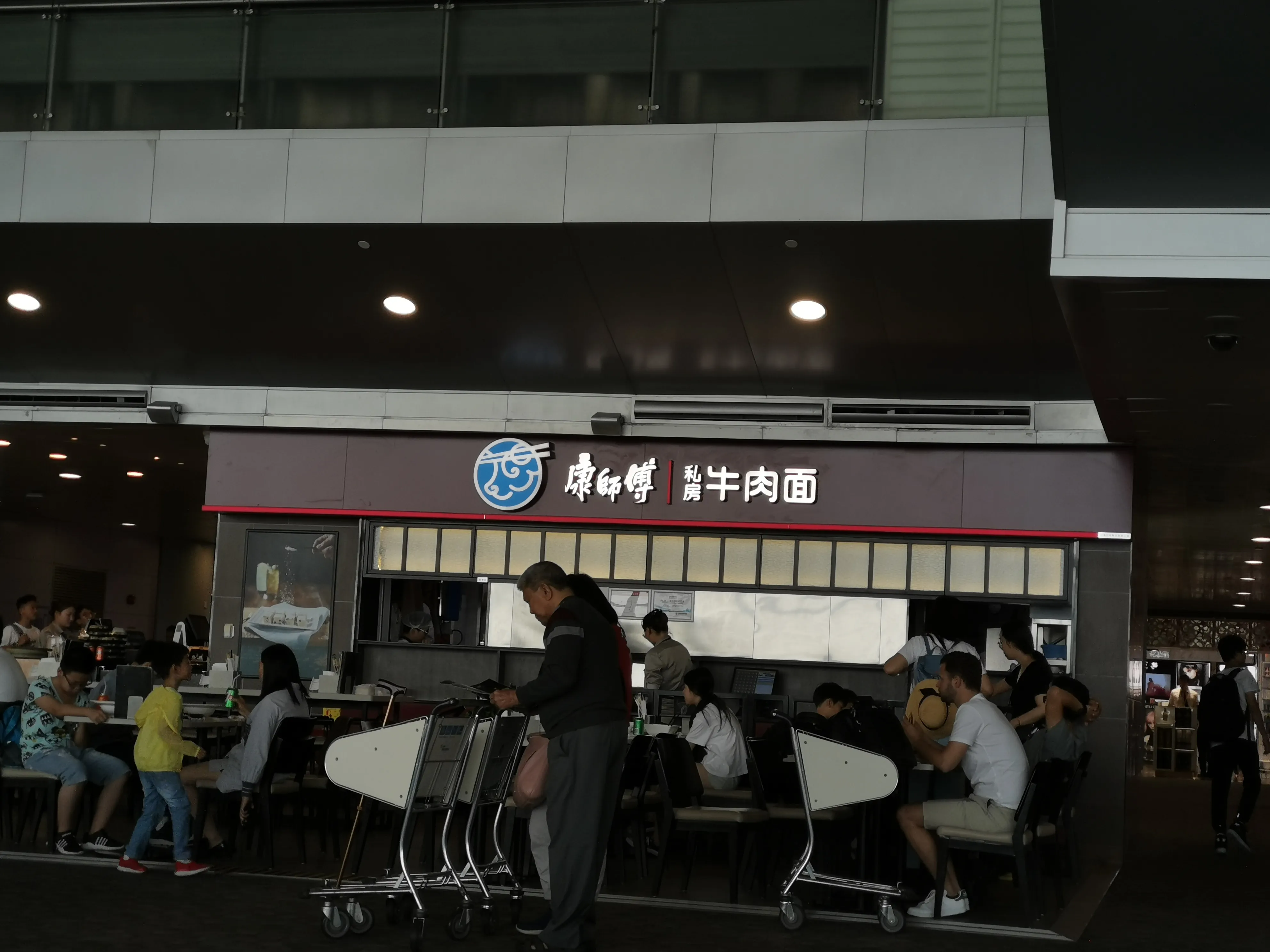 The classic Chinese-airport send-off: a hot bowl of beef noodles.
- A hot bowl of beef noodles (牛肉面). The quintessential Chinese-airport meal — outlets like Master Kong’s “private kitchen” (康师傅私房牛肉面) do a steaming bowl that’s the perfect, comforting goodbye to China.
- Canton 8 (喜粤8号) — a two-star Michelin-recognised Cantonese restaurant with a branch in the restricted departure area, if you want one last serious dim-sum or roast-goose meal. (More on these in our Michelin guide.)
- Crab, done properly. Hairy-crab fans are spoilt here. Chenglonghang Crab King (成隆行蟹王府) — the same name as the Michelin-starred Shanghai crab house — has an outpost in the Satellite Hall (S2, near gate H170) for crab-roe rice and whole crab in season. For a quicker fix, Yuzhilan (玉芝兰) does crab-roe noodles near gate D77, and Shilu (食庐) a crab-roe rice on the Level-3 platform by E island.
- The cult palmier. Le Jardin de Joël Robuchon (卢布松烘焙坊), near gates D71–D75, sells Shanghai’s famous “bigger-than-your-face” butterfly pastry (蝴蝶酥), plus breads, cakes, ice cream and drinks (06:30–22:00).
- Western chains — Burger King (near gates D71–D75, open 24h), Starbucks, % Arabica, Blue Bottle and Pacific Coffee, plus café/bistros like Café DECO.
- Milk tea & desserts — a CHAGEE (霸王茶姬) for a last Chinese milk tea (open 24h, near check-in and security), or Häagen-Dazs and bakeries like O’mills and Nonna for something sweet.
- Halal options are available too, clearly signed, if you need them.
Most outlets run 06:00 until the last departing flight; a handful (Burger King, some Starbucks) are 24 hours. If you’re on a red-eye, check before you bank on a sit-down meal — late at night the choice thins out.
Ordering with no Chinese
Don’t overthink it. Nearly everything has picture menus or self-order screens with an English toggle — choose, tap, scan to pay. If a counter only has a Chinese menu, pointing works fine, and our order food without Chinese guide covers the rest.
How to pay (the easy part)
- Alipay / WeChat Pay are accepted virtually everywhere — the default way to pay. (Set them up here if you haven’t already.)
- Cash (RMB) is still accepted at the airport, which makes it the perfect place to spend down your leftover yuan — you can’t easily change notes and coins once you’re home. See our departure tips.
- Foreign Visa/Mastercard are increasingly taken, especially at duty-free and the larger stores. Smaller stalls may be QR-only, so keep a payment app or some cash handy.
What to buy: duty-free & last-minute shopping
The airside China Duty Free (中免 / cdf) hall in T2 — refreshed for 2026 — is large and aimed squarely at international travellers:
- Cosmetics & fragrances — Shanghai duty-free is genuinely competitive globally on big beauty brands (Estée Lauder, La Mer, Shiseido, Korean labels). This is the category most worth buying here.
- Chinese baijiu — including Kweichow Moutai (茅台), the classic gift-bottle, plus international whisky, wine and spirits.
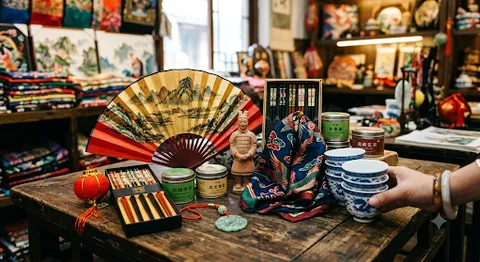
- Tea — green, oolong and pu’er in airport-friendly gift tins.
- Luxury — watches, bags and leather goods (Gucci, Prada, Burberry, Omega, Rolex), and tobacco.
Take home a piece of Shanghai
For local, giftable souvenirs — not just the global duty-free brands — head to the Shanghai Brand Plaza (上海品牌广场) between Terminals 1 and 2. Behind its bright-orange front is a roll-call of homegrown names: White Rabbit (大白兔) milk sweets, Meilin (梅林) and Bright (光明), Warrior (回力) sneakers and Shanghai Soap (上海制皂) — easy, recognisable gifts. It even has a Shanghai Brand Coffee (上海牌咖啡) counter, China’s first home-grown coffee house (since 1935), pouring retro-flavoured lattes (08:00–22:00).
Inside T2 there’s more local character: a dedicated White Rabbit (大白兔) store near the E check-in zone in departures, the near-200-year-old cosmetics house Xie Fuchun (谢馥春) with its duck-egg face powder and “24 solar terms” solid perfumes, and the cuddly scented-plush brand FUFUSOUL — the latter two by gate C92 (07:00–22:00).
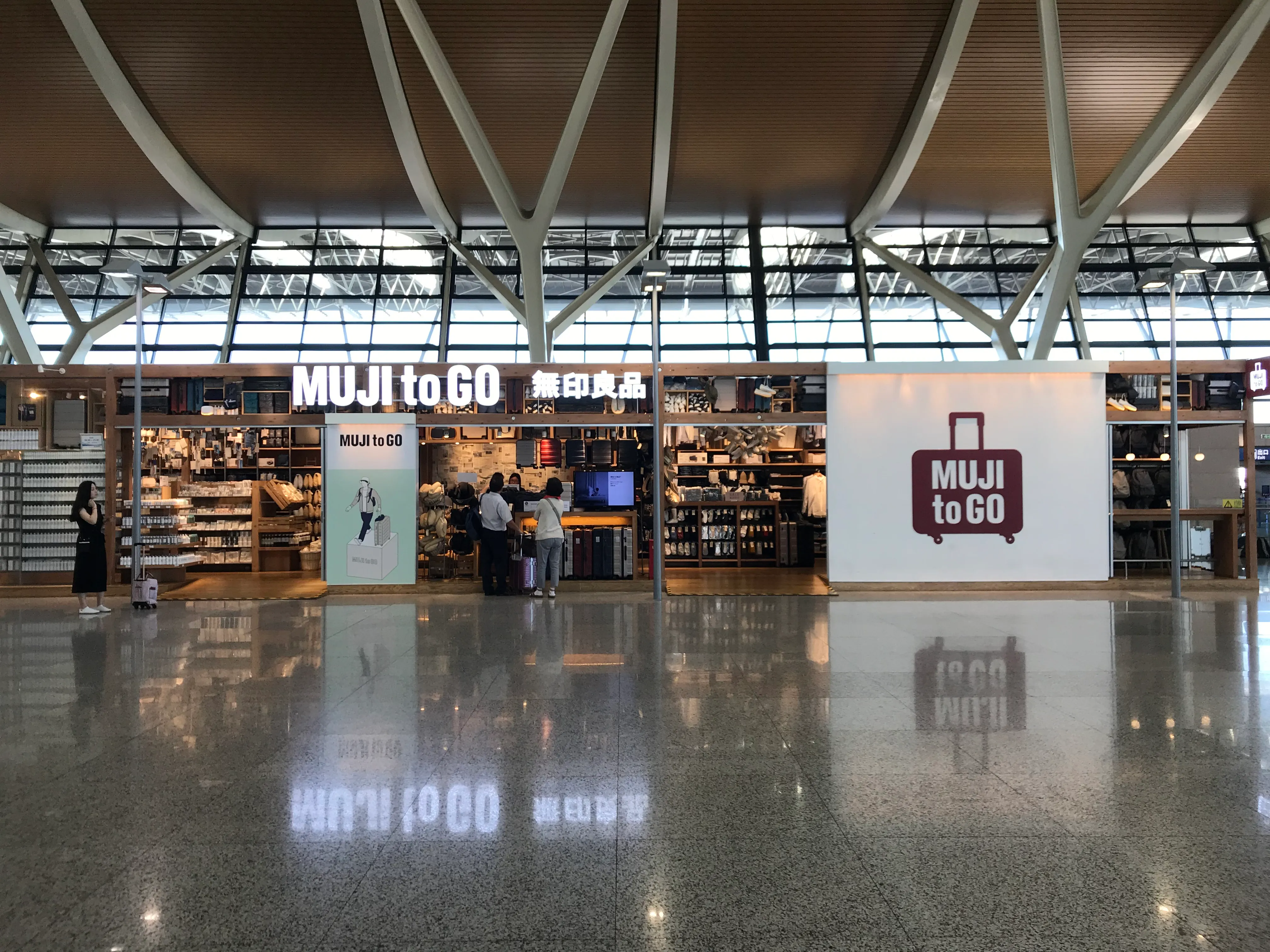 Landside shops like MUJI to Go are handy for last-minute snacks and small gifts.
Worth knowing:
- Not everything is a bargain. Cosmetics and spirits often are; tea and generic souvenirs are frequently cheaper in town than at the airport. If you still need gifts, our guide on where to buy souvenirs and fair prices is worth a glance.
- Pre-order to lock it in. cdf lets you reserve online and collect near your gate, which can secure stock and sometimes a better price than buying on the spot.
- Watch for holiday discounts. Around peak travel periods the duty-free runs spend-tiered deals — in early 2026, for example, 10% off a single spend over ¥3,000 and 15% off over ¥6,000, plus random vouchers. Check the signage or the cdf mini-program before you pay.
- Landside shops — MUJI to Go, convenience stores and bookshops are fine for snacks, a travel pillow, or a small last gift before you go through.
Before you head to the gate — five quick reminders
- Spend your leftover yuan on that last meal or snack — it’s the easiest “exchange rate” you’ll get. (Departure checklist.)
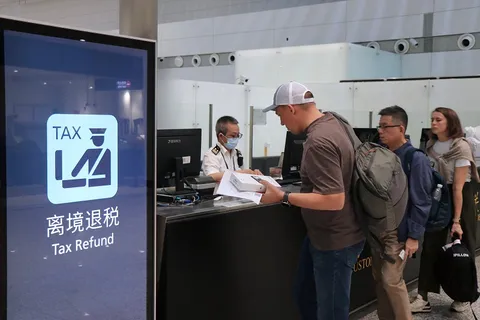
- Claim your VAT refund before security if you bought eligible Tax Free goods — the desk can be slow, so allow time. (VAT refund guide.)
- Keep your VPN on if you need Google, WhatsApp or Instagram — the airport Wi-Fi sits behind the Great Firewall too, and that handy eSIM is your simplest connection.
- Mind the liquids rules. Sealed duty-free liquids are fine in their tamper-evident bag with the receipt — but if you have an onward connection, check that the next country accepts them.
- Skip restricted souvenirs. Real antiques, old ethnic textiles and wildlife products can be seized — see what you can’t export from China.
The short version
- Eat: cheaper and more local before security (Yonghe King breakfast); a noodle bowl, Canton 8, or the usual chains after.
- Pay: Alipay/WeChat or cash everywhere; foreign cards at duty-free and bigger shops.
- Buy: cosmetics, baijiu/Moutai and spirits are the real duty-free wins; grab Shanghai treats (White Rabbit & co.) at the Brand Plaza; buy tea and generic souvenirs in town.
Get those right and your last stop in China stays exactly as it should be — calm, full, and with your pockets emptied of small change. Until the next journey east. 🏮
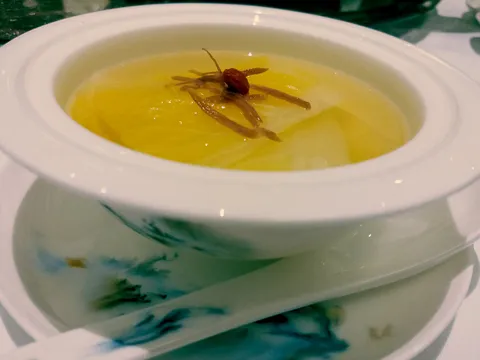
Hero and food photos: Windmemories and Walter Grassroot via Wikimedia Commons (CC BY-SA). New-shop and restaurant details cross-checked against Shanghai Airport Authority’s official guide (January 2026).