These are the services and bookings I actually use and recommend for travelling in China — the practical, behind-the-scenes stuff that makes a trip run smoothly. Sort these and you can focus on the fun part.
Stay connected
- Klook China eSIM — get online the moment you land, with routing that handles everyday apps. See the eSIM guide. I use an eSIM for data myself — it’s the simplest way to stay online without swapping out your home SIM.
- A VPN, set up before you fly — Google, WhatsApp and Instagram are blocked, so install one at home. The VPN guide walks through the options that actually work.
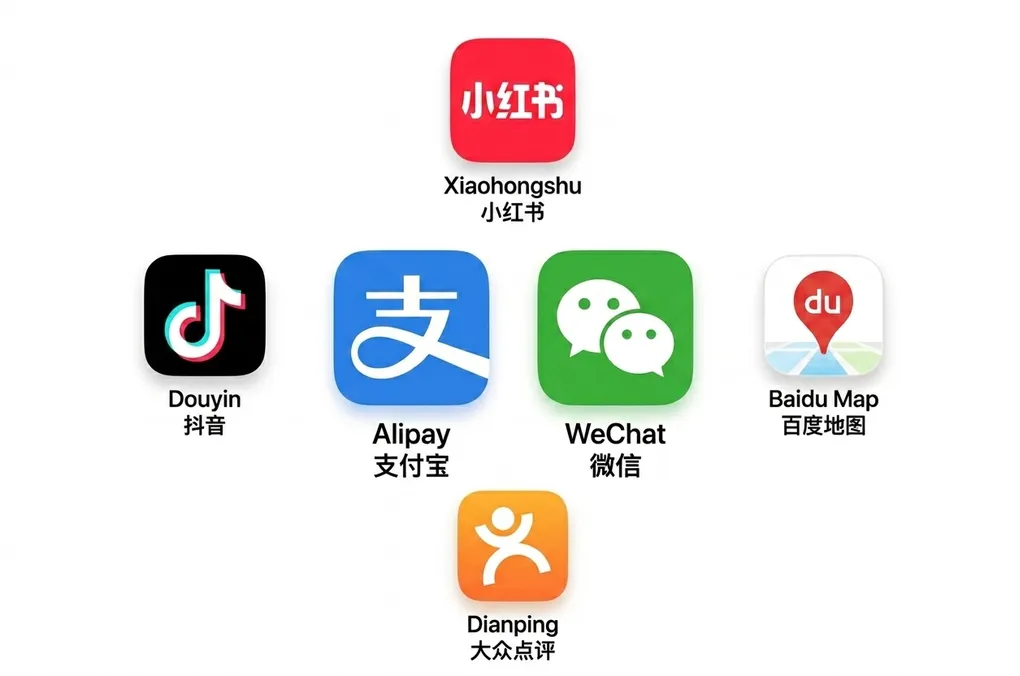
🧑💻 Insider note on VPNs: locals like me usually don’t use a commercial VPN — we subscribe to a 小机场 (xiǎo jīchǎng, a small “airport” proxy service), which is cheaper and fast. The catch: they’re Chinese-language, paid for with Alipay/WeChat, and can vanish or get blocked without warning. For a visitor that’s a headache you don’t want — a VPN you set up at home is far more reliable. I cover both routes in the VPN guide.
Getting around
- Trip.com — book high-speed rail and domestic flights in English with a foreign card. See the high-speed rail guide.
Where to stay
- Booking.com / Agoda — foreigner-friendly hotels across every city and budget. See booking hotels in China.
- My hand-picked, good-value stays by city and metro line: recommended hotels.
🏨 What I actually book: I stay with Huazhu (华住会 / H World) hotels — their group covers familiar, reliable chains like Hanting (汉庭), JI Hotel (全季) and Orange (桔子), from budget to smart-business. Consistent, clean, well-located near metro stops, and the Huazhuhui membership earns points and member rates. Many branches are bookable through Booking/Agoda/Trip.com for foreigners, so you can get the same rooms I use.
Tours & experiences
- Viator and Klook — book Great Wall trips, panda visits and day tours in English.
- Flying from Europe and want it all handled? TUI runs escorted China packages. See self-guided vs package.
🙋 Full honesty: I don’t book guided experiences myself — as a local I just turn up and figure it out. But that’s exactly the gap these services close for a first-time visitor: a few hours with an English-speaking guide takes the friction out of ticketing, queues and getting to far-flung sights. Worth it for the big-ticket days even if I’d skip them.
Before you go
- Allianz Global Assistance — solid travel insurance with strong medical and evacuation cover. See the insurance guide.
- iVisa — help with your China visa application if you need one. See the visa guide.
Online shopping & groceries
If you’re staying a while (or just love the convenience), these are the two apps that run daily life here:
- JD (京东, Jingdong) — the parent company of JoyBuy, my pick for electronics, household goods and groceries, with famously fast, reliable delivery (often same-day). Best for when you want it now and want it genuine.
- Taobao (淘宝) — the everything-store; if it exists, it’s on Taobao, usually cheaper. Great for browsing, less guaranteed on quality.
Both need a Chinese phone number and Alipay/WeChat Pay to use fully, so they suit longer stays more than a short trip — but they’re the real backbone of how people here shop and eat.
Fun things to try
Small pleasures I’d tell any visitor to seek out:
- HEYTEA (喜茶) — China’s new-style tea is a genuine cultural phenomenon; grab a fresh-fruit or cheese-foam tea at least once. More in Chinese tea culture.
- KFC & McDonald’s, China edition — yes, really. The local menus are worth tasting: congee and soy milk for breakfast, rice bowls, egg tarts, spicy chicken, and limited-time regional specials you won’t find back home. A fun, low-stakes window into how global brands localise here if you are more risk-averse in dining.